
[Digital Today reporter Jinju Hong] One of the questions consumers considering an electric bicycle most want answered is not how it feels at first, but whether it can hold up after years of daily use. First-impression reviews are easy to find, but real examples of long-term use are less common than expected.
In that context, a rider has attracted attention by disclosing real-world experience after riding more than 10,000 miles, or about 16,000 km, on an e-bike. Electric vehicle outlet Electrek reported the details on Jan. 1 local time.
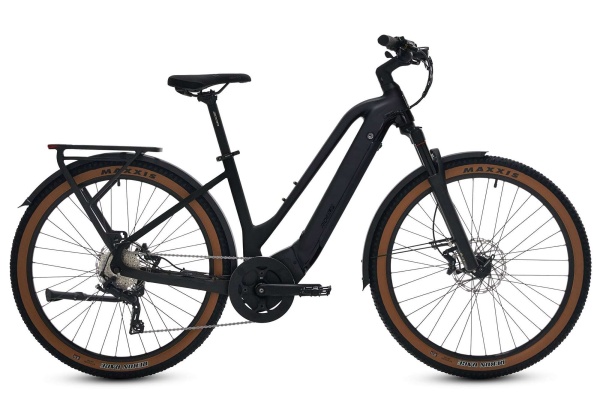
The rider bought Ride1Up’s Prodigy V2 in March 2023 for $1,595, about 2.3 million won. The bicycle was used almost daily, for commuting as well as weekend rides, building an unusually high mileage for an e-bike over a little more than 2 years. The owner shared the process on social media, detailing durability, upkeep costs and wear points.
The most notable part is the condition of key components. The frame and fork remained solid, with no cracks or signs of fatigue. The Brose mid-drive motor is also operating normally, with no loss of power or unusual noise.
Battery performance, a concern for many consumers, also stood out. After 10,000 miles, it was confirmed to retain more than 80 percent of its original capacity. That is significant because the e-bike was used daily for commuting.
Shifting and braking performance also remained stable. The Shimano derailleur kept smooth shifting with basic adjustments. The Tektro brakes showed no major issues other than pad replacements.
Wear-and-tear part replacements were unavoidable. Parts replaced over 10,000 miles were 3 chains, 2 sets of brake pads, 1 set of tires and 1 cassette, and total maintenance cost was about $295, or about 420,000 won. That is not much different from a regular bicycle with high mileage. Most parts were easy to find, and servicing was possible without difficulty at a local bike shop.
A comparison case is also noteworthy. A low-priced Chinese-made e-bike bought by the owner’s friend around the same time suffered a motor failure after 3,000 miles, or about 4,830 km, and battery performance dropped sharply. The bicycle was eventually disposed of for parts. That does not mean cheap e-bikes are always bad, but it underscores the difference with a reliable brand.
The key is parts availability and after-sales support rather than price itself. Ride1Up is a U.S.-based brand, responded quickly to customer inquiries, and most maintenance could be handled at a local shop, which made a big difference in long-term use.
The cost per mile makes the picture clearer. Dividing the $1,595 purchase price by 10,000 miles comes to about $0.16 per mile, and about $0.19 even including upkeep. That is very low compared with average car operating costs of $0.60 to $0.80 per mile. The owner said, "Even if the bike broke down right now, I have already gotten my money's worth."
The case shows that what the e-bike market needs is not short-term reviews but long-term usage data. A well-chosen mid-priced e-bike can be a realistic means of transport that can replace a car, and brand reliability and after-sales support become more clearly valuable over time.
Electrek said, "An e-bike will not last forever, but the fact that it ran 10,000 miles without problems is enough to prove how much of a difference the right choice can make."
 Jinju Hong
hongjj@d-today.co.kr
Jinju Hong
hongjj@d-today.co.kr