
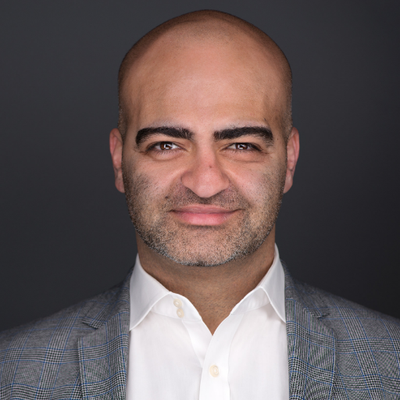
Ben Fox Rubin (벤 폭스 루빈), a vice president at Mastercard who oversees content editing, drew attention with a post highlighting Circle’s push to build a stablecoin-based payments network.
Mastercard unveiled a crypto partner programme a few days ago, and Circle was listed as a participant. Mastercard’s move focuses on building a blockchain-based payments network that links digital assets with the payments industry.
Rubin cited Circle Chief Commercial Officer Kash Razzaghi (카쉬 라자기) to highlight Circle’s strategy and vision for its blockchain payments business. Razzaghi also had a conversation with the Mastercard newsroom after attending the World Economic Forum.
According to Razzaghi, Circle is building infrastructure to make blockchain-based payments and financial services a reality that ordinary users can use. It supports companies in adopting blockchain-based payments through developer tools, the Circle Payments Network and its own blockchain, Arc.
He explained that it is building an internet finance platform that promotes and accelerates the shift to on-chain movement of funds.
"If financial infrastructure moves to blockchain, remittances are expected to become faster, costs to fall and transparency to rise. Changing the entire payments ecosystem is not something any one company can do alone," Razzaghi said.
He said traditional financial institutions such as banks and card networks are now moving to accept blockchain technology. It is not a view that blockchain will replace existing institutions, but that an ecosystem can develop together. Razzaghi said there are expectations that the cost of moving money will get close to zero and speeds will increase.
There are three main areas where stablecoins are used. The first is trading and investment.
People who invest in digital assets such as bitcoin or ether use USDC to adjust positions flexibly and maintain stable value.
The second is payments, especially cross-border remittances.
"Moving funds through blockchain removes intermediate steps, lowers fees, and processes settlement that used to take days in seconds or minutes. It is not constrained by bank business hours," Razzaghi said.
The third is storing value. "In countries experiencing a decline in the value of their local currencies, such as Iran, Venezuela and Argentina, dollar-pegged stablecoins are becoming a way to protect assets," he said. He added that their role as a means of payment and of storing value is expected to expand total stablecoin market capitalisation far beyond current levels.
Asked when stablecoins will become mainstream, Razzaghi said: "There is a view that stablecoins will become mainstream when they simply become part of the infrastructure and people do not even know whether what they hold is a stablecoin. People are simply holding $1 and sending $1. We often compare it to sending email without knowing what HTTP is on a website, a moment when on-chain infrastructure just becomes plumbing."
On cooperation between Circle and Mastercard, he said each has a role in blockchain payments. "Mastercard goes beyond providing trust in payments to make transactions more accessible, remove barriers and intermediaries, and eliminate friction. Over time it will also become more cost-efficient," he said.
Circle said cooperation with Mastercard will help broaden the spread of stablecoins and digital assets. "We are looking ahead to the future of on-chain movement of funds. In the future it will be better for funds to move on-chain. There are, of course, big challenges left to solve in infrastructure, regulation and compliance, but if Mastercard starts building on-chain infrastructure in earnest and begins using on-chain products for its customers, it will accelerate the pace of adoption," he said.
 Chi-gyu Hwang
delight@d-today.co.kr
Chi-gyu Hwang
delight@d-today.co.kr