
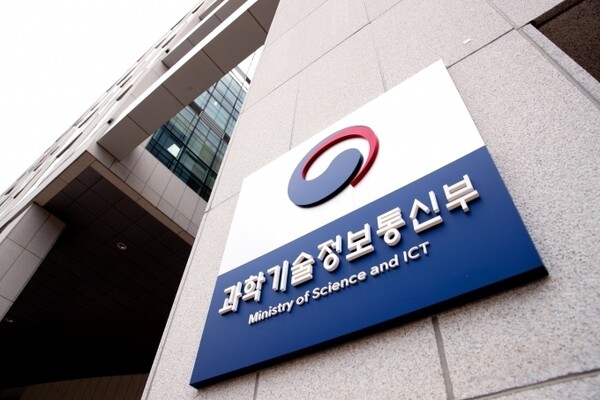
South Korea's Ministry of Science and ICT said on Monday it will improve spectrum regulations to ease inconvenience in people's daily lives and resolve difficulties at industrial sites.
The revision includes a total of 4 institutional changes. First, it will raise indoor Wi-Fi power in part of the 6 GHz band (5,925 to 6,425 MHz) to 1 W from 0.5 W. This is expected to make large-capacity, ultra-low latency communications easier and allow smoother delivery of artificial intelligence services and extended reality content. A stable wireless communications environment is also expected at smart factories and workplaces.
The ministry also prepared a system related to new Bluetooth technology used to find the location of devices such as wireless earphones. By adding a new Bluetooth radio format, it will enable accurate indoor location tracking services using low-power, high-efficiency technology.
It will also ease radio-wave regulations to improve mobility convenience for visually impaired people. It will allow use of the 235.3 MHz frequency in gateways that connect voice guidance devices and smartphones, so visually impaired people can check location information through a smartphone app instead of a dedicated remote control.
It improved the system to allow use of TV white space (TVWS) at underground and tunnel construction sites. Even in environments where global positioning system use is difficult, TVWS data communications wireless devices will make real-time safety management and worker location checks possible. It also eased regulations so mobile devices, which had lower power limits than fixed devices (no more than 1 W per 6 MHz), can operate at the same power level as fixed devices if certain conditions are met within designated areas, even though mobile devices had been limited to no more than 100 mW per 6 MHz.
The institutional changes were 추진 through revisions to 2 notices that stipulate spectrum can be used without separate permits or approvals. The ministry said it completed the revision process after an administrative notice period from last month Feb. 8 to 28. The ministry said the changes are meaningful in supporting a new communications environment driven by advances in AI and digital technology and in supplementing areas with weak communications infrastructure.
Lee Hyun-ho (이현호), director general of the Radio Policy Bureau at the ministry, said, "The ministry will continue to gather opinions from the public and companies, and do its best to resolve difficulties related to spectrum."
 Jin-ho Lee
jhlee26@d-today.co.kr
Jin-ho Lee
jhlee26@d-today.co.kr