
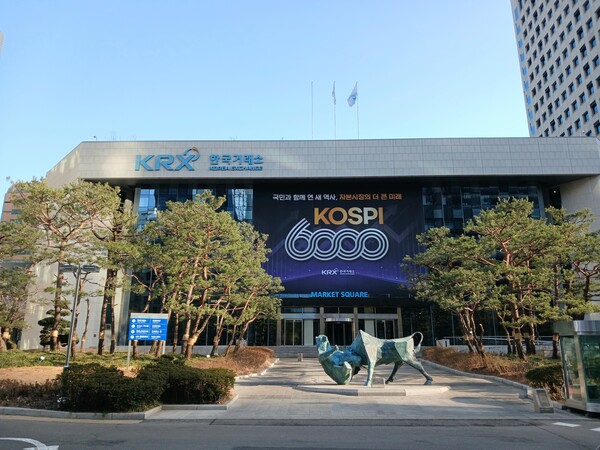
The Korea Exchange’s Market Oversight Commission said on Tuesday it notified the Financial Services Commission of 98 suspected unfair-trading cases, based on the results of its reviews of abnormal transactions in 2025.
By type, insider trading accounted for 58 cases, or 59.2 percent of the total, the most among all categories. It was followed by 18 cases of fraudulent trading, or 18.4 percent, 16 cases of stock price manipulation, or 16.3 percent, and 6 cases including violations of reporting obligations, or 6.1 percent.
By market, the KOSDAQ market recorded the most with 66 cases. It was followed by the KOSPI market with 28 cases, the KONEX market with 2, and derivatives with 2.
In particular, insider-trading acts related to tender offers continue to occur. Authorities detected 11 cases that used tender-offer information for various reasons, including voluntary delisting and stabilising management control.
It also recorded 4 cases of fraudulent trading and stock price manipulation that exploited the characteristics of political themes, such as elections, which can easily lure retail investors.
The methods used included spreading rumours by linking a specific stock to political issues or driving up share prices with large buy orders without an intent to execute trades.
The average number of suspects in major unfair-trading cases was 16.1 per case, up 1.0 from 2024.
Insiders accounted for 77.8 percent of involvement in fraudulent-trading cases, markedly higher than in other categories such as stock price manipulation at 25.0 percent and insider trading at 50.0 percent.
As fraudulent-trading methods become increasingly sophisticated, the average amount of illicit gains per case rose to 2.4 billion won from 1.8 billion won in 2024, an increase of 33.3 percent.
Through a joint response team launched in July 2025 to eradicate stock manipulation, the Market Oversight Commission shortened the time required for market surveillance and reviews under its fast-track review standard to 3 months from 6 months previously.
It plans to focus reviews on serious fraudulent trading and to strengthen analysis of new types of unfair trading that exploit new systems such as the introduction of an alternative trading system in the second half of 2026 and extended trading hours.
 Sangyeop Oh
yub@d-today.co.kr
Sangyeop Oh
yub@d-today.co.kr