
South Korea's cable TV industry, which is in a downturn, called on the government to prepare support measures. It said if policy measures are delayed it will seek a full deferral of broadcast development fund payments and review the operation of regional channels.
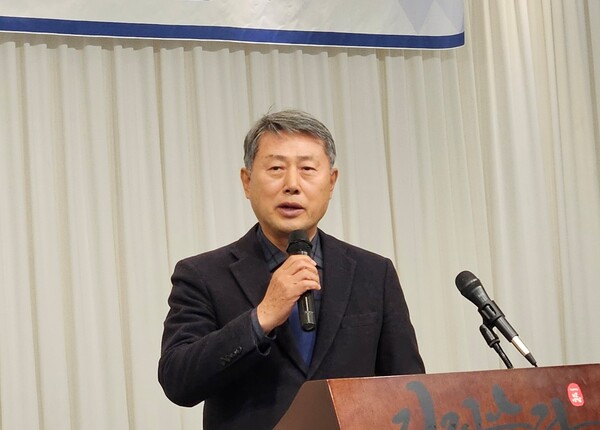
The Korea Cable TV Broadcasting Association (KCTA) held a media briefing on March 10 and said the current crisis was not the problem of individual operators but a structural crisis caused by a policy vacuum. It said the government and the industry should jointly participate in a research group to produce sustainable policy measures and a roadmap for institutional improvements.
The association stressed the need for a policy research group that would encompass a shift in the regulatory paradigm, securing the sustainability of pay TV, reasonable standards for calculating content fees and a cable TV exit strategy linked to a subscriber protection system. The association wants a rough policy proposal within 3 months.
The association stressed that if the government does not begin forming the policy research group and improving institutions, it will demand a full deferral of broadcast development fund payments. It said that with cable TV system operators' operating profit margins remaining in the 0 percent range as of 2024, it was hard to accept the current system that collects 1.5 percent of revenue as a lump-sum levy for the fund. It also pointed to the lack of any reduction measures for cable TV, while regional terrestrial broadcasters performing similar public responsibilities receive reductions depending on their broadcast advertising revenue bracket, the decline in revenue, and the size of net profit or loss for the period.
Last year, the Ministry of Science and ICT reviewed a plan to lower the fund collection rate to 1.3 percent or less, but there has been no progress as pay TV duties were transferred to the Broadcasting and Media Communications Commission.
An association official said 1.3 percent, which the government is discussing, was the minimum acceptable level. The official said that for cable TV system operators to survive, the fund needs to be lowered to at least about 0.8 percent of revenue.
The association also called for a public support system that matches the obligation to operate regional channels. It said cable TV system operators, as licensed operators, carry out public responsibilities such as running regional channels and broadcasting disaster and election coverage. It said only obligations are imposed without regional broadcasting status or financial support. Hwang Hee-man (황희만), the association's president, said, "If the government does not respond to forming a policy research group and discussing institutional improvements, we will fully reconsider the obligation to operate regional channels."
The association also described the industry's difficulties. D'Live, for example, posted revenue of around 2.3 trillion won in 2014, but it fell to around 1.5 trillion won in 2024, 10 years later. Over the same period, the operating profit margin fell from around 20 percent to below 1 percent.
Kim Deok-il (김덕일), CEO of D'Live, said that as TV influence has declined, cable TV has been having a harder time than IPTV. He said the biggest problem was that companies cannot adjust content sourcing costs, the largest cost in the broadcasting business, on their own. Kim said that although discussions on standards for calculating content fees have been ongoing for years, they rely only on industry agreement, making it urgent for the government to establish standards.
The association said cable TV remains a public platform used by more than 12 million households nationwide. It said if the industry collapses, local information, disaster response and even the foundations of local democracy could weaken together.
It added that if the government does not present a policy direction, the industry will have no choice but to pursue self-help measures for survival. It stressed that what is needed now is not inaction but a responsible policy decision.
 Jin-ho Lee
jhlee26@d-today.co.kr
Jin-ho Lee
jhlee26@d-today.co.kr