
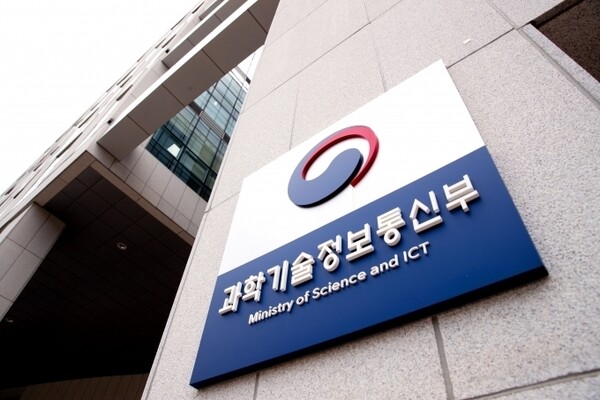
South Korea's Ministry of Science and ICT held a meeting of solar cell researchers on March 10 at the National Research Foundation of Korea in Daejeon. It shared the status of solar cell technology development and progress on research tasks.
The meeting was held to discuss ways to secure "ultra-gap solar cell technology" to lead the next-generation solar cell market and to hear difficulties during research and development.
Solar cells are a core device in solar power generation that converts sunlight into electrical energy. They are seen as a key technology for responding to the climate crisis and for the energy transition. The ministry is conducting research to raise solar cell efficiency and to secure technologies that can be used in various forms such as building-integrated photovoltaics (BIPV) and vehicle-mounted types.
The meeting discussed solar cell technology development goals and a roadmap included in the K-Moonshot project, as well as ways to secure ultra-gap technologies. It also shared key research and development results secured through government support.
Research teams led by Professor Jin-young Kim (김진영) of Seoul National University and Dr Jeung-hyun Jung (정증현) of the Korea Institute of Science and Technology (KIST) presented a case of achieving 26.3 percent efficiency, described as the world's highest level, in a perovskite-CIGS tandem solar cell. The result was listed on the U.S. National Renewable Energy Laboratory (NREL) solar cell efficiency chart in 2025.
The meeting also shared a range of research results, including work by Professor Jang-won Seo (서장원) of the Korea Advanced Institute of Science and Technology on improving perovskite module stability and durability, and by Professor Byung-ha Shin (신병하) of the Korea Advanced Institute of Science and Technology on antimony chalcogenide inorganic thin-film solar cell technology. It also included CIGS-based ultra-light, multi-form, multi-junction technology by principal researcher Ki-hwan Kim (김기환) of the Korea Institute of Energy Research, and development of ultra-high-efficiency perovskite triple-junction foundational technology by Professor Hyun-seok Jung (정현석) of Sungkyunkwan University.
Participants stressed the need to develop next-generation solar cell technologies that can replace existing silicon solar cells and create new markets. They also requested full-cycle R&D support to secure foundational ultra-gap solar cell technologies and to achieve early commercialisation.
Dae-hyun Oh (오대현), director general for Future Strategic Technology Policy at the ministry, said, "Solar cells are a key technology that can achieve both greenhouse gas reductions and energy self-reliance at the same time." He added, "We will communicate continuously with on-site experts to bring forward the timing for securing ultra-gap solar cell technologies."
 Jin-ho Lee
jhlee26@d-today.co.kr
Jin-ho Lee
jhlee26@d-today.co.kr