
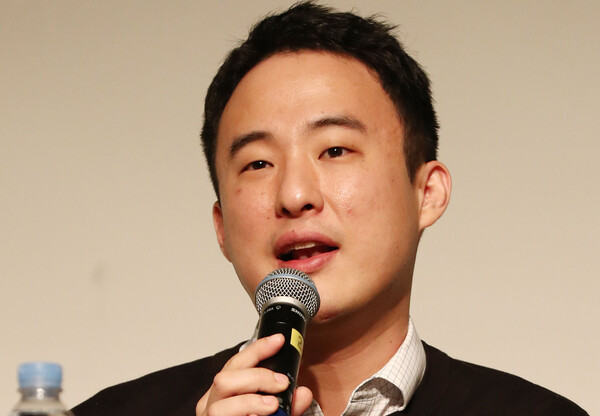
Lee Jun-haeng (이준행), founder of Gopax and former chief executive of its operator Streami, has been cleared by police after stepping down following the suspension of payments of virtual asset deposits known as the “GoPay incident” that left about 3,000 victims.
Attention is now on whether the victim relief process, delayed for nearly 3 years, will speed up.
Users who deposited virtual assets with Gopax after the collapse of a U.S. virtual asset exchange in 2022 have yet to be repaid, and police decided not to forward both of the two complaints filed by Binance, the global virtual asset exchange operator that acquired the company, against Gopax’s former management.
Yonhap reported on Feb. 8 that the Seoul Suseo Police Station decided on Jan. 11 not to forward Lee’s case on allegations of embezzlement under the Act on the Aggravated Punishment, etc. of Specific Economic Crimes, citing insufficient evidence. It was also confirmed that the Seoul Metropolitan Police Agency’s Financial Crimes Investigation Unit in November last year found no wrongdoing on allegations of breach of trust.
Lee stepped down as CEO of Streami, Gopax’s operator, in February 2023 after selling all of his more than 40 percent stake in Gopax to Binance, the world’s largest virtual asset exchange that wanted to enter the South Korean market.
The key issue in the case was whether Lee caused damage to the company while dealing with the GoPay incident.
Gopax filed a complaint with police in April last year, more than 2 years after Lee stepped down.
Gopax claimed Lee had sold company assets known as “Genesis bonds” worth about 83.3 billion won at a bargain price in June 2023, causing damage to the company in breach of trust, and had misappropriated 60 bitcoins owned by the company in 2021, amounting to embezzlement.
Police took a different view. They said the bond sale was not a unilateral decision by Lee but a lawful management decision made through a unanimous resolution by the management and board at the time.
Police also said that because Gopax had to repay unpaid GoPay deposits at the time, selling the Genesis bonds at a low price could not be seen as an attempt to seek private gain. They also concluded that the bitcoin embezzlement allegation was hard to 인정, based on accounting records and statements from employees.
The GoPay incident began in November 2022 after FTX, one of the world’s three largest coin exchanges, filed for bankruptcy. Gopax had entrusted customers’ coins to virtual asset investment bank Genesis Trading, but about 60 billion won of customer funds were tied up when Genesis was unable to return the money in the aftermath of FTX’s collapse.
In February 2023, Lee said he received a promise of full repayment of GoPay losses in exchange for transferring his stake to Binance, the world’s largest exchange. But the repayment remains incomplete, with about 37 percent of losses still unpaid, as the filing to change the largest shareholder has been delayed and was compounded by a dispute over management control with Binance.
As bitcoin prices rose, the value of assets to be repaid is estimated to have now exceeded 100 billion won.
Lee told Yonhap, “I spent a difficult time after being sued and demonised even though I filled the debt by dipping into my own assets. I hope my honour is restored and the debt repayment is made as soon as possible.”
He has filed countersuits accusing Gopax and a former CEO identified only as A of making a false accusation, and a Binance director identified only as B of defamation by spreading false information. He claims the company was handed over at a “bargain price” to enable swift recovery of money deposited by users, but that Binance has been insufficient in follow-up measures such as repayment after obtaining virtual asset-related business rights in South Korea.
Lee and Binance are currently undergoing international arbitration proceedings at the Korean Commercial Arbitration Board (KCAB) over issues including non-payment of the stake acquisition price.
[Yonhap]
 Online Team
d-today@d-today.co.kr
Online Team
d-today@d-today.co.kr