
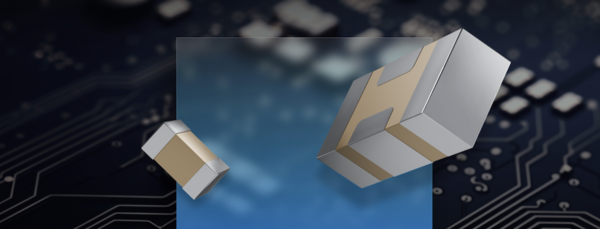
As the DDR5 memory era begins in earnest, Samsung Electro-Mechanics is expected to benefit as a producer of high-voltage multilayer ceramic capacitors, or MLCCs. With fundamental changes to module structure after DDR4 memory, demand is expected to surge for special 25-volt-class MLCCs. A new growth opportunity has come for Samsung Electro-Mechanics, which has formed an oligopolistic structure with Japan's Murata.
On Jan. 1, industry sources said expectations are growing that Samsung Electro-Mechanics, a major MLCC player, will deliver record results in 2026 as the DDR5 shift coincides with expanding AI infrastructure. Brokerages see the structural changes in DDR5 memory modules as a turning point that goes beyond a simple specification change and reshapes the broader components industry.
Up to DDR4, power management integrated circuits, or PMICs, were located on the motherboard. In DDR4 systems, 12 volts was supplied from a switching mode power supply, or SMPS, then stepped down to 1.1 volts by a voltage regulator to power the memory module, so MLCC rated voltage was around 4 to 6.3 volts.
In DDR5, the voltage regulator was moved from the motherboard into the memory module to support higher bandwidth and power efficiency. As a result, the 12 volts output from the SMPS is supplied directly to the module's voltage regulator, sharply lifting MLCC rated-voltage requirements to 25 volts.
With PMICs mounted on the memory module itself, the basic design has changed, making special MLCCs that can withstand 25-volt-class high voltage essential for stable operation. For PMICs to operate normally and effectively remove voltage noise, high-capacity, high-voltage MLCCs must be mounted together on the module board.
Samsung Electronics said DDR5 applies an on-die error correction code, or ODECC, based on a self-correction solution, enabling self-correction of up to 1-bit errors even in big-data environments. It also said an on-dimm PMIC improves power-management efficiency and supply stability, securing 20 percent higher power efficiency than DDR4. Replacing DDR4 with DDR5 in data centres can cut power use by up to 1 terawatt hour a year, it said.
To meet these market needs, Samsung Electro-Mechanics developed the world's first MLCC with specifications of 0805 inch, X6S, 22 microfarads and 25 volts. Samsung Electro-Mechanics is already mass-producing a lineup with 25-volt rated voltage and 22 microfarads capacity in 0805 inch and 1206 inch sizes, and is responding actively to rising demand as the DDR5 transition accelerates.
Samsung Electro-Mechanics seen hitting record revenue and operating profit in 2026
These technical requirements are expected to create a high value-added market distinct from general MLCCs, directly supporting improved results at Samsung Electro-Mechanics. Meritz Securities raised its 2026 estimates for revenue and operating profit at Samsung Electro-Mechanics' components division by 2.3 percent and 10.6 percent, respectively.
That reflects higher demand for MLCCs used in AI servers and the effect of improved margins. Meritz Securities said it expects an oligopolistic market structure led by Samsung Electro-Mechanics and Murata to remain in place, because AI server MLCCs require both ultra-small size and high-capacity technology.
Murata recently raised its estimate at an investor day for the number of MLCCs installed per AI server baseboard to 15,000 to 20,000 units from 10,000 to 15,000 units, Meritz Securities said. On that basis, it revised its forecast for the compound annual growth rate of AI server MLCCs to 30 percent.
That shows MLCC demand is rising as the DDR5 shift coincides with expanding AI infrastructure. It implies structural change is under way across the components industry, beyond a simple memory specification change. On that basis, Samsung Electro-Mechanics is expected to set a new record high in 2026, driven by its ability to produce 25-volt-class high-voltage MLCCs and the expansion of AI infrastructure.
Daishin Securities forecast Samsung Electro-Mechanics' 2026 revenue at 12.3 trillion won, up 9.3 percent from a year earlier, and operating profit at 1.2 trillion won, up 31 percent, marking an all-time high. FC-BGA accounted for more than 50 percent of substrate solution revenue in the third quarter of 2025 on increased supply to global big tech for AI, and 2026 revenue is expected to rise 20 percent to drive overall growth, Daishin Securities said.
Hana Securities said that even as AI server shipments in 2026 rise 16 percent from a year earlier, the increase in MLCC demand will exceed that due to a higher number of GPUs per server rack and rising thermal design power, or TDP, of servers. It also said that despite concerns about intensifying competition in the IT MLCC market, an absolutely high level of utilisation is expected to be maintained, centred on AI.
A shift in profit sources is also expected to improve the business mix. Industrial and automotive already account for more than 50 percent of revenue, exceeding IT. Daishin Securities said industrial and automotive MLCCs have built up technology and a portfolio on par with Japanese companies.
 Daegeon Seok
d2dg@d-today.co.kr
Daegeon Seok
d2dg@d-today.co.kr