
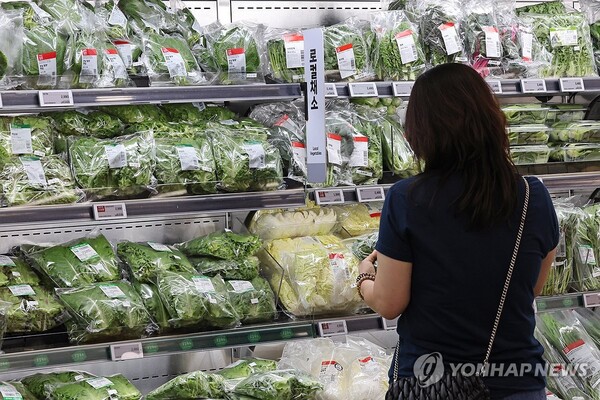
South Korea's consumer inflation rate came in at 2.3 percent in December, extending a run of four straight months in the 2 percent range. The impact of a weak won was reflected in prices of petroleum products and imported agricultural, livestock and fisheries goods.
National Data Agency, formerly Statistics Korea, said in its "December 2025 and annual consumer price trend" report released on Wednesday that the consumer price index rose 2.3 percent from a year earlier in December. The pace eased slightly from November's 2.4 percent increase, but inflation has stayed in the 2 percent range since September.
Petroleum products and agricultural, livestock and fisheries items led the rise. Petroleum product prices rose 6.1 percent, the biggest increase this year. Diesel prices climbed 10.8 percent, the highest in about 3 years, and gasoline gained 5.7 percent. The rise is seen as reflecting the weak won and a reduced fuel tax cut rate.
Prices of agricultural, livestock and fisheries goods also rose 4.1 percent. Imported beef prices rose 8.0 percent, while increases continued in imported and fish-focused items such as mackerel, bananas, mangoes and kiwifruit. The living price index rose 2.8 percent, indicating a relatively heavy burden on perceived inflation.
Annual consumer inflation this year was 2.1 percent. That was the lowest level in 5 years since 2020 and was slightly above the government's 2.0 percent inflation target. Petroleum product prices rose 2.4 percent on an annual basis, turning higher for the first time in 3 years.
 Seulgi Son
sageson@d-today.co.kr
Seulgi Son
sageson@d-today.co.kr