
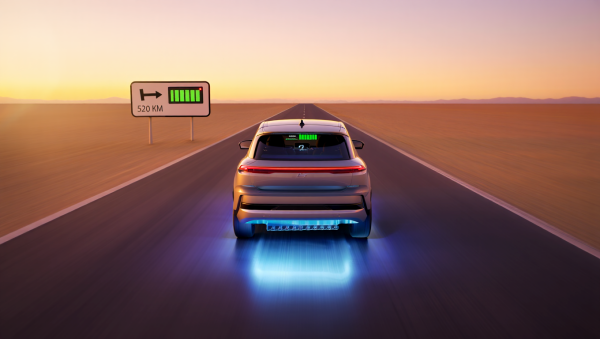
As electric vehicles travel farther, concerns that battery performance deterioration will become severe appear to be somewhat at odds with real data. For the latest EVs, battery degradation remains limited even after long-distance driving, an analysis said, with no major problems for real-world use. EV outlet InsideEVs reported the findings on Jan. 29 local time.
According to real-world driving data from EV telematics analysis firm Recurrent, which tracked and analysed thousands of EVs worldwide, vehicles that have driven more than 150,000 miles, or about 240,000 km, still maintain significant drivable range.
Recurrent examined about 1,000 EVs in its portfolio and surveyed the real drivable range of vehicles that have driven more than 150,000 miles. The results were calculated not from EPA estimates but by comparing the range to the vehicle's real drivable range when it was new.
It found that 2023 models improved range retention by about 10 percent compared with 2012 models. Advances in battery chemistry, thermal management systems and charging strategies mean newer EVs see far less degradation even after long-distance driving, it said.
Recurrent's analysis showed that among 14-year-old EVs from 2012 that have driven 150,000 miles, average range retention was about 81 percent. By contrast, 2023 EVs were expected to retain about 91 percent of their initial battery capacity under the same conditions. The data confirmed that EV battery durability has steadily improved over time.
It also presented specific cases. A 2023 Tesla Model 3 with a new-vehicle range of 270 miles, or about 435 km, was found to be able to drive about 247 miles, or about 399 km, on a full charge even after 150,000 miles. A 2015 Nissan Leaf had a real-world range of only about 67 miles, or about 107.8 km, when new, and after the same mileage fell to about 56 miles, or about 89.6 km. Older EVs not only saw larger degradation but also faced the limitation of smaller initial battery capacity.
Battery replacement rates also improved sharply. Recurrent said only 0.3 percent of third-generation EVs produced since 2022 needed battery replacement. That is far lower than the 2 percent replacement rate for the previous generation produced from 2017 to 2021. It is a huge improvement compared with the 8.5 percent replacement rate for first-generation Nissan Leaf and Volkswagen e-Golf models launched in 2013.
Liz Najman (리즈 나즈먼), director of market insights at Recurrent, said in an interview with InsideEVs last year that current new EVs were expected to be usable for at least 15 years without battery problems. She said automakers have established ways to manage lithium-ion batteries reliably.
Battery problems have not disappeared completely, but most cases stem from manufacturing defects and are handled through recalls or warranties. Battery prices and replacement costs have also fallen sharply over the past 10 years, reducing the burden on consumers compared with the past.
The industry expects the data to help ease consumer anxiety about EV battery life. Experts said the conclusion from the current data is that, rather than worrying excessively about thousands of battery cells in the vehicle floor, people can just keep driving.
 Jinju Hong
hongjj@d-today.co.kr
Jinju Hong
hongjj@d-today.co.kr