
[DigitalToday reporter Jinju Hong (홍진주)] CATL, the world’s largest battery maker, unveiled next-generation battery technology that it said enables everyday fast charging while minimising long-term battery degradation. CATL said it solved the durability problem long seen as the biggest weakness of existing EV batteries through new battery-cell materials and an advanced thermal management system.
According to EV outlet InsideEVs on Saturday, the perception remains strong in the EV market that frequent use of fast charging rapidly reduces battery capacity. In the used-EV market, vehicles that emphasise they have not used fast charging sometimes trade at higher prices. Repeated DC fast charging can accelerate degradation, and replacing an entire battery pack can cost tens of thousands of dollars. CATL called such concerns "a thing of the past" and stressed the new battery can be used longer than the life of the vehicle.
According to CATL, the newly developed 5C battery retains 80 percent of its capacity even after 1,400 charge-discharge cycles in a high-temperature environment of 60 degrees Celsius (140 degrees Fahrenheit). Assuming a range of 372 miles (about 600 km) per charge, cumulative driving distance reaches 522,000 miles (about 840,000 km). CATL said the figure assumes Dubai’s extreme summer heat.
Under milder conditions of 20 degrees Celsius (68 degrees Fahrenheit), performance improves further. CATL said the battery maintains at least 80 percent capacity after 3,000 charge-discharge cycles, and cumulative driving distance could reach 1.12 million miles (about 1.8 million km). CATL said this is about six times higher durability than the industry average.
CATL said the improvement was made possible by combining multiple technical elements. It said it reduced degradation through dense, uniform anode coating, and added a "self-healing additive" to the liquid electrolyte to seal microcracks and minimise lithium loss. It also applied a temperature-responsive special material to the separator surface inside each battery cell to further extend battery life.
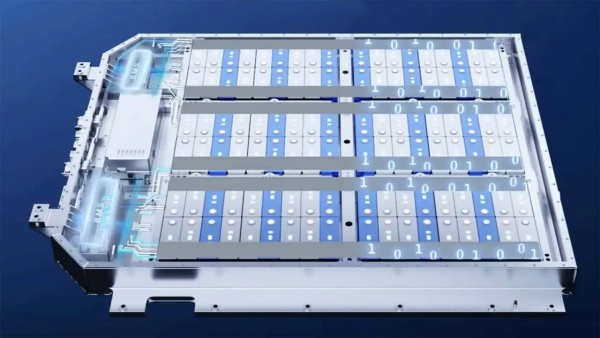
The battery management system (BMS) was also improved. CATL said it designed the battery pack to distribute coolant intensively to specific areas if the pack overheats, greatly extending the life of the entire pack. It said this would make the EV ownership experience easier and more convenient.
CATL did not specify when the battery will enter mass production or which vehicles or commercial uses it will be applied to. The industry has also raised concerns that ultra-fast chargers exceeding 1 megawatt (1,000 kW) are emerging, centred on China, and that such chargers are meaningless if battery technology cannot support them.
CATL’s 5C charging refers to power equal to five times battery capacity in kilowatt hours. For example, a 100 kWh battery pack can be charged at up to 500 kW, and in theory can be fully charged in about 12 minutes. The dominant view in the industry is that the shift to EVs will accelerate in earnest when charging times are reduced to the level of internal combustion engine vehicles.
CATL did not provide a separate explanation on whether its 5C battery technology is linked to existing technologies such as its recently announced sodium-ion battery with strong low-temperature performance.
 Jinju Hong
hongjj@d-today.co.kr
Jinju Hong
hongjj@d-today.co.kr