
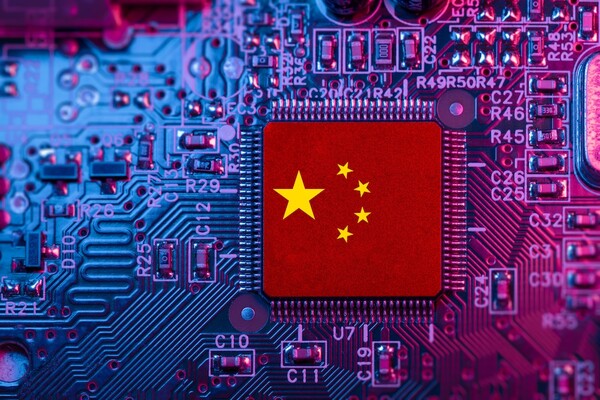
Chinese foundries are expected to push aggressive price cuts in the general-purpose semiconductor market after China’s Lunar New Year holiday in mid-February. With inventory adjustments ending in January and wafer orders starting in earnest in February, the move is raising concerns about worsening profitability for South Korea’s foundry industry.
Some Chinese fabs are preparing to expand market share by offering prices 15 to 20 percent lower than Taiwanese and South Korean companies for older processes to keep utilisation rates up after the holiday, Chinese local media reported. The main targets are general-purpose products such as power management ICs and display driver ICs. As about 60 to 70 percent of South Korean fabless companies use mature processes, a shift of volume to China to cut costs would make a drop in utilisation rates at South Korean foundries unavoidable. The hit is expected to be concentrated in 8-inch processes, a mainstay for Korean foundries.
Government subsidies and aggressive equipment investment underpin Chinese foundries’ ability to wage a low-price offensive. TrendForce said major expansion plans last year included SMIC’s Lingang (Shanghai) and Beijing fabs, Huahong Group’s Fab9 and Fab10, and Nexchip’s N1A3. Barclays forecast, based on an analysis of 48 Chinese fabs, that China’s chip production capacity would more than double within 3 to 5 years, with most focused on legacy semiconductors of 28 nanometres and above.
TrendForce estimates that Chinese companies accounted for more than 25 percent of mature-node capacity among the top 10 global foundries at the end of last year. Global 8-inch wafer capacity, meanwhile, is expected to fall 2.4 percent this year from a year earlier as Samsung Electronics and TSMC strategically scale back. It is a structure in which only China expands while the rest shrink.
Selective polarisation strategy: "spreading across a wide front from advanced to general-purpose"
Chinese foundries are also pursuing a “selective polarisation” strategy, cutting prices for general-purpose chips while raising prices in AI-related processes. TrendForce said SMIC and Huahong Semiconductor have utilisation rates of 90 to 100 percent for their 8-inch and 12-inch mature-process lines, and notified customers of price increases of about 10 percent for certain processes such as BCD and high-voltage processes where demand for AI-related power semiconductors has surged. The approach is to secure profitability in high value-added processes where demand is concentrated, while locking in share through low prices in fiercely competitive general-purpose legacy products.
With this two-pronged strategy, South Korean foundries face a choice between maintaining utilisation rates and defending profitability. U.S. and Taiwanese companies were expected to bring a windfall by shifting orders to South Korea as they strengthened a “de-China” stance, but in lower-spec chip areas dependent on China’s domestic market, South Korean firms instead fell behind in price competition.
The problem is that a response is not easy in the short term. The Korea Institute for Industrial Economics and Trade said procurement networks in China form the backbone for displays, batteries, chemical materials and semiconductor equipment, making full substitution difficult. The price offensive by Chinese materials, components and equipment is unfolding across a wide front from advanced to general-purpose, and its impact is extending not only to small and mid-sized firms but also to large companies, it explained.
A key task for South Korea’s foundry industry is to avoid a war of attrition with China backed by subsidies while maintaining competitiveness in core areas where alternative supply lines are not secured. Han-jin Park (박한진), a visiting professor at Hankuk University of Foreign Studies and former head of KOTRA’s China regional headquarters, wrote in a contribution to the Korea Institute for Industrial Economics and Trade that China is pursuing a strategy to control the entire supply flow by managing bottlenecks in global supply chains. He said shifting to a risk-managed dependence structure, not “de-China”, is realistic. He added that areas that can be replaced should be dispersed, and that resilience should be strengthened through stockpiling and diversification for key items.
 Dae-geon Seok
d2dg@d-today.co.kr
Dae-geon Seok
d2dg@d-today.co.kr