
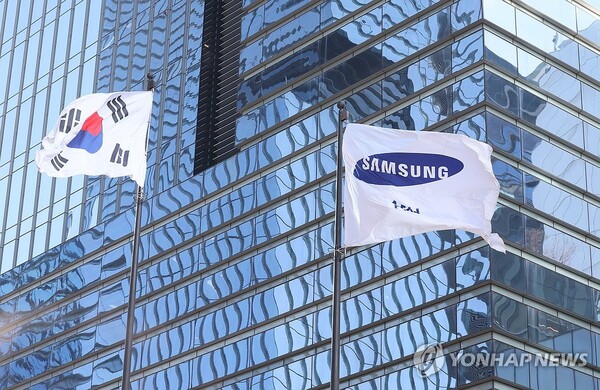
Samsung Electronics has reclaimed the top spot as the company Korean office workers most want to work for, a survey showed, returning to No. 1 after three years.
Blind, an anonymous community platform for office workers, said on Saturday it analysed 236,106 responses to its survey of the "top 100 companies people most want to work for" from Jan. 1 to Dec. 31 last year. The results showed Samsung Electronics ranked first.
It is the first time since 2022 that Samsung Electronics has topped the category.
Looking at the companies and status of respondents who picked Samsung Electronics as the company they most want to work for, a large number were LG Electronics employees and public officials.
Hyundai Motor, which ranked first for two years from 2023, fell to sixth in the latest survey. Kia, which rose to fourth in 2024 from eighth in 2023, climbed another two spots this time to take second place.
Coupang and SK Hynix held onto third and fifth, respectively, for a second straight year, as they did the year before last. Viva Republica, operator of Toss, jumped three places to take fourth.
Ranks seven through 10 were Hanwha Aerospace, Naver, Hyundai AutoEver and POSCO, in that order.
An analysis said manufacturing companies related to semiconductors, automobiles and defence, along with IT-based conglomerates, were generally seen as the most popular job sectors.
Expanding the range to the top 20 included many state-run companies such as Korea Electric Power Corp (12th), Korea Gas Corp (13th), Korea Railroad Corp (15th), Seoul Metro (17th) and National Health Insurance Service (18th).
Preference was also high for the games industry such as Nexon (11th) and Krafton (14th), as well as finance and IT platform companies including Bithumb (16th), KakaoBank (19th) and Karrot (20th).
A Blind data analysis official said, "Last year, popularity was particularly pronounced for manufacturing roles at large conglomerates and in the finance and IT industries." The official added, "Looking at the keywords mentioned alongside these companies, it seems a performance-based compensation system increased interest in the sector."
The official also said, "Only a very small number of companies maintain such interest over the long term." The official added, "Those companies have in common that they have steadily narrowed the gap between the real experiences of their members and outside expectations."
[Yonhap]
 Online Team
d-today@d-today.co.kr
Online Team
d-today@d-today.co.kr