
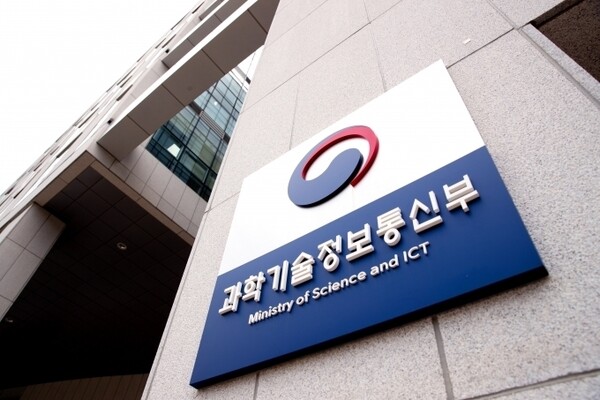
[Digital Today reporter Jin-ho Lee (이진호)] The Ministry of Science and ICT said on Friday it finalised the "2026 implementation plan for regional science and technology innovation and university-research institute cooperation projects" to spread science and technology capabilities concentrated in the Seoul metropolitan area across the country and to build region-led innovation ecosystems.
Under the plan, the ministry will invest a total of 108.2 billion won this year in three key projects: support for regional R&D innovation, building a university-research institute cooperation platform and fostering deep-tech scale-up valleys.
It will invest a total of 89.0 billion won in the regional R&D innovation support project. It will provide 13.1 billion won each to four regions - the central, Honam, Daegyeong and southeastern areas - and 8.8 billion won each to three special areas - Gangwon, North Jeolla and Jeju - to achieve balanced regional development centred on the "four poles and three special areas".
It will fully shift away from a centrally led approach to a "regional autonomous R&D system" in which regions directly plan and carry out projects. Local governments, industry, universities and research institutes will cooperate around four science and technology institutes and government-funded research institutes in each region to pursue region-led autonomous R&D. The four-pole regions will pursue development of source technologies for future new industries, while the three special areas will promote talent training in cooperation with science and technology institutes.
The project to build a university-research institute cooperation platform has, since 2023, built a virtuous cycle for regional development through a joint cooperation platform (UNI-CORE) between regional universities and government-funded research institutes in four areas: Chungcheong, Honam-Jeju, the southeast and Daegyeong-Gangwon. In 2026, it will invest a total budget of 10.0 billion won to step up talent training and technology commercialisation based on regional demand.
The deep-tech scale-up valley project, promoted since 2024, builds networks among regional research institutes and companies around universities and government-funded research institutes with deep-tech technologies. It supports start-ups, technology commercialisation and company scale-ups. In 2026, it will invest a total of 9.2 billion won and focus support on quantum (the Korea Research Institute of Standards and Science) and AI advanced robotics (KAIST) in Daejeon, and AI semiconductors (ETRI) in Gwangju.
The ministry said, "We will move beyond the existing central-led approach and fully pursue a regional autonomous R&D," adding, "We plan to lay the foundation for regions to become the main agents of innovation on their own."
 Jin-ho Lee
jhlee26@d-today.co.kr
Jin-ho Lee
jhlee26@d-today.co.kr