
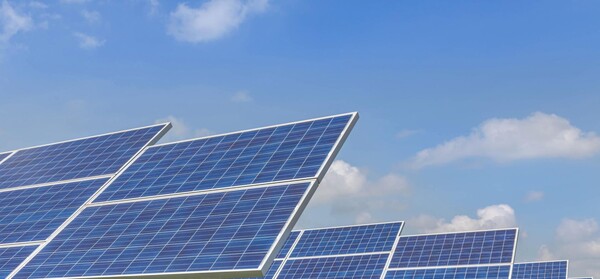
Global big tech companies are increasingly using the ability to secure renewable energy as a criterion when choosing locations for artificial intelligence (AI) data centres, prompting a warning over South Korea’s ability to stay competitive. Carbon costs tied to securing power have become a factor that can determine competitiveness in attracting global companies as tenants, more than the act of building the data centre itself.
The Institute for Energy Economics and Financial Analysis (IEEFA) said South Korea’s power structure, with fossil-fuel generation accounting for 58.5 percent as of 2023, would become a structural weakness in competition to attract companies.
Differences in carbon pricing between countries mean additional carbon costs would arise when products made in South Korean factories using LNG-centred electricity are exported to the European Union, it said. IEEFA said the structure would raise counterparty risk and production costs for semiconductor clusters and AI data centres.
The issue has become visible as the European Union’s Carbon Border Adjustment Mechanism (CBAM) is fully implemented. IEEFA said South Korea’s power carbon intensity is 436 grams of CO2 per kilowatt hour, and reaches about 490 grams of CO2 per kilowatt hour even when considering only liquefied natural gas (LNG) thermal power generation. That is about half the level of coal at about 1,000 grams of CO2 per kilowatt hour, but still high compared with renewable energy.
With a gap in carbon prices between the EU Emissions Trading System (ETS) and South Korea’s emissions trading scheme (K-ETS), additional carbon costs would arise when results computed using LNG-based power at South Korean data centres move into the EU market. The structure means that even if data centre facilities are state-of-the-art, high carbon costs for the electricity used increase operating cost burdens for tenant companies.
◆Speed of renewable energy expansion to decide competitiveness in attracting companies
Beyond carbon costs, securing power itself is a bottleneck. Yuanta Securities said power demand for AI data centres is shifting from dispersed expansion in 100 to 300 megawatt units to concentrated loads on a gigawatt scale. Power per AI server rack has risen to 600 kilowatts or more, and applying a power usage effectiveness (PUE) of 1.3 to 1,000 racks of 1 megawatt yields actual incoming power of about 1.3 gigawatts. Data centre construction can be completed in 18 to 24 months, but expanding 765 kilovolt transmission networks takes 3 to 7 years. Grid infrastructure is structurally failing to keep pace with demand.
Behind the situation is a structural problem in which the phase-out of coal has resulted in expanded LNG use. IEEFA said South Korea’s coal-fired power generation fell 23 percent in 2017 to 2023, but gas-fired generation rose 25 percent. While carbon dioxide (CO2) emissions from coal power fell to 185 million tonnes, emissions from gas power rose to 77 million tonnes, pushing total CO2 emissions from the power sector up 6 percent to 256 million tonnes.
With coal phase-out failing to lead to decarbonisation, the South Korean government decided to import an additional 9 million to 10 million tonnes of U.S. LNG a year under a South Korea-U.S. energy agreement. That is nearly double 5.6 million tonnes imported in 2024, or 12 percent of total imports of 46.33 million tonnes, and could paradoxically increase dependence on fossil fuels instead of renewable energy.
Securing renewable energy has also become important in the phase of attracting global companies after building data centres. South Korea’s government is stepping up a shift to renewable energy alongside the creation of a Ministry of Climate, Energy and Environment. Legislation has passed to ease setback-distance rules for solar power, and a special offshore wind power law takes effect in March.
Eugene Investment & Securities forecast that annual domestic installations of renewable energy and battery energy storage systems (BESS) would more than triple from the current 3 gigawatt range to about 10 gigawatts by 2030. It said whether the policy shift can translate into actual installations will be key.
IEEFA urged a shift in the 12th Basic Plan for Long-term Electricity Supply and Demand, scheduled to be announced in the first half of 2026. "The coal phase-out path should run in parallel with accelerating renewable energy deployment, rather than expanding dependence on LNG, and through this, supply-chain carbon risks for South Korean industry should be mitigated," it recommended.
 Dae-geon Seok
d2dg@d-today.co.kr
Dae-geon Seok
d2dg@d-today.co.kr