
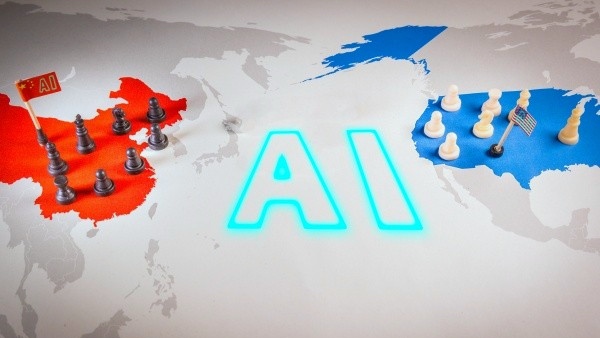
China’s big tech companies will unveil next-generation AI models in succession around the Lunar New Year in February. Attention is also focused on what variables they may introduce to China’s AI landscape, beyond how much they might threaten U.S. companies such as OpenAI, Google and Anthropic.
The Information reported on Jan. 29 that Chinese giants Alibaba Group and ByteDance plan to disclose next-generation flagship AI models around the Lunar New Year.
Chinese AI startup DeepSeek is also reportedly likely to unveil its next-generation flagship AI model, V4, around a similar time to Alibaba and ByteDance. That is expected to make an AI showdown among leading Chinese tech companies around the holiday hotter than ever.
ByteDance, the internet company that owns TikTok, will introduce three models in February: a large language model (LLM), an image generation model and a video model. The Information reported this, citing two sources familiar with internal matters.
ByteDance is preparing a new LLM, Doubao 2.0, an image generation model, Seedream 5.0, and a video generation model, SeedDance 2.0. ByteDance’s push into AI is drawing attention as it comes while the company is threatening Alibaba, China’s largest player in the cloud computing market.
Alibaba is also preparing to respond. The Information reported, citing two other sources familiar with internal matters, that Alibaba will unveil its next-generation AI model, Qwen 3.5, around a similar time to ByteDance. Alibaba’s model is reportedly optimised for complex reasoning tasks and is expected to deliver strong performance in coding and mathematics.
Earlier, Alibaba recently unveiled its new reasoning model, Qwen3-Max-Thinking. The company stressed that Qwen3-Max-Thinking expanded its scale to more than 1 trillion parameters for reinforcement learning, and that it achieved performance gains across key areas including factual knowledge processing, complex reasoning, instruction following, alignment with human preferences and agent capabilities.
Alibaba is also preparing a large-scale marketing campaign for its Qwen AI app aimed at individual users for the Lunar New Year. Competition is also expected to intensify with ByteDance’s Doubao chatbot, the AI app most used by Chinese users. As of December, Doubao had 163,000,000 monthly active users.
ByteDance has integrated the Doubao chatbot into Douyin, TikTok’s China service. Douyin is rapidly evolving beyond a video app into an e-commerce platform, also raising the level of competition between Alibaba and ByteDance.
After big tech, promising Chinese AI startups are also continuing to release new models. Moonshot AI recently introduced its new foundation model, Kimi K2.5. The company said Kimi K2.5 has strong capabilities in coding and visual data understanding. Separately, Z.ai, formerly Zhipu AI, unveiled GLM-4.7 late last year, its latest AI model specialised in code generation. Although it was released as a free open model, it drew attention by outperforming top paid models from Google and OpenAI in some benchmarks.
Chinese companies are also moving faster in the AI commerce market.
Recently, Alibaba updated its Qwen AI chatbot to let users complete transactions such as ordering food and booking flights without leaving the app. Qwen is linked with Alibaba’s e-commerce platforms including Taobao and Fliggy to support personalised product recommendations and payments. This is a step beyond earlier AI that only provided recommendations. ByteDance also upgraded its Doubao AI chatbot and added automation features such as ticket reservations. Tencent also introduced AI agents in the WeChat ecosystem.
 Chi-gyu Hwang
delight@d-today.co.kr
Chi-gyu Hwang
delight@d-today.co.kr