
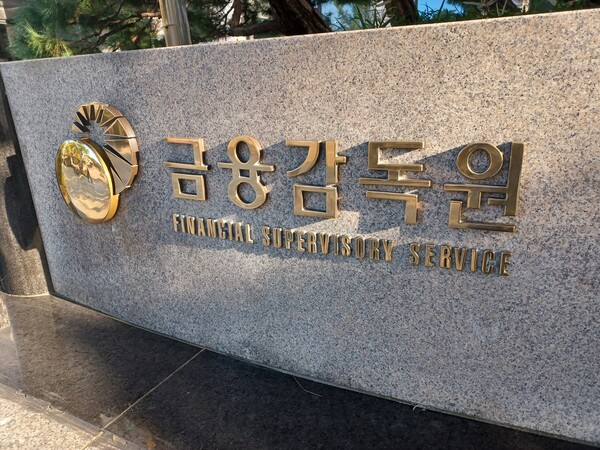
South Korea's Financial Supervisory Service again avoided being designated a public institution this year.
The Ministry of Economy and Finance on Jan. 29 held a meeting of the Public Institutions Steering Committee chaired by Deputy Prime Minister and Finance Minister Yun-cheol Koo (구윤철) and deliberated and approved the 2026 plan for designating public institutions.
Koo said a total of 342 institutions were designated as public institutions after comprehensively considering changes in the policy environment for public institutions, designation requirements and the practical benefits of managing public institutions.
The government again postponed a decision on designating the FSS as a public institution and decided to review it next year. The conditions for the deferral are improving public interest and transparency.
On management, it will strengthen control by the Financial Services Commission, the agency's supervising ministry. It will specify the requirement to consult the FSC when adjusting headcount or reorganising the organisation. It will also strengthen management disclosures through the public institution management information disclosure system, ALIO.
The agency must make additional disclosures, including detailed breakdowns of the head's work-related expenses and items related to environmental, social responsibility and corporate governance improvement, or ESG. It will also expand items regulating employee welfare benefits.
To innovate financial supervision, the FSS will shift from its existing sanctions-focused approach to a pre-emptive, consulting-style inspection method. It was instructed to prepare procedures for notifying inspection results and to draw up and implement measures to overhaul financial supervision, including other inspection and sanctions procedures and exemptions from liability.
It was also instructed to faithfully implement the financial consumer protection improvement roadmap announced in December last year.
To ensure the FSS carries out the conditions for the deferral, the government said it will strictly reflect them in the management evaluation manual and report them to the steering committee.
The steering committee will review next year whether to designate the FSS as a public institution after examining results such as management efficiency gains from implementing the conditions.
Koo said the FSS has seen its authority expand, but criticism related to public interest has continued, including controversy over whether it exercises that authority appropriately and opaque management. He said designating it as a public institution could improve public interest and transparency, but it could also lead to inefficient results by undermining autonomy and expertise.
 Ji-young Lee
ljy@d-today.co.kr
Ji-young Lee
ljy@d-today.co.kr