
The pharmaceutical and biomedical industries have long developed by relying on materials derived from animals. But supply methods for specialty bio materials that presume animal sacrifice face growing constraints, driven by unstable supply, concerns over material safety, tighter regulation and ethical issues. That is creating the need for practical alternatives.
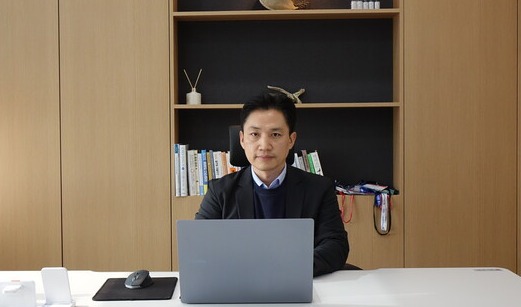
In particular, endotoxin testing materials derived from horseshoe crab blood and heparin materials derived from pig intestinal mucosa cannot be replaced by chemical synthesis or by plants or insects. Declines in animal populations, outbreaks of animal disease and global geopolitical risks are severely threatening supply stability and material safety. Unstable supply brings sharp price volatility and heightens quality risks, ultimately affecting patient safety. CellWeavers, a startup led by Chief Executive Kondition Sik (조건식), was founded to address these structural problems in supplying animal-derived specialty bio materials.
Kondition Sik said he repeatedly encountered the fact that supply structures for essential animal-derived materials in the bio industry are unstable and sometimes risky. He said he founded CellWeavers to develop technology to fundamentally solve the problem.
CellWeavers is a startup established to supply animal-derived specialty bio materials through cell-culture technology without animal sacrifice. Its strategy is to supply bio materials that the pharmaceutical, bio and medical device industries can trust in a safer, more reproducible and sustainable way.
Kondition Sik stressed that the company is not simply developing animal-alternative materials. He said CellWeavers is redesigning the supply structure by shifting the supply method for the same substances from animals to animal cells. He said this means a fundamental shift in industrial structure beyond technological innovation.
◆ C-LAL test, C-heparin: Specialty bio materials produced through cell culture
CellWeavers has two core businesses. The first is the C-LAL test, which develops cell-culture-based endotoxin testing materials and kits that use them. Endotoxins cause strong fever reactions when injected into the body, so vaccines, biopharmaceuticals, aesthetic medical products and implantable medical devices must pass endotoxin tests to be commercialised. The LAL test made from horseshoe crab blood cell extracts is currently used as the global gold standard method.
But the existing LAL test could not escape an animal-dependent structure based on extracting horseshoe crab blood. As a result, supply shortages, price swings, environmental issues and regulatory problems have occurred simultaneously.
CellWeavers' cultured LAL test creates a stable structure that can supply the same materials without sacrificing horseshoe crabs by continuously and stably culturing and proliferating horseshoe crab blood cells. A third-party evaluation report said the cell-culture-produced C-LAL test is cheaper than existing products, has stable supply, has less batch-to-batch variation, and has sensitivity equal to or higher than existing commercial products.
CellWeavers was able to complete technology development in a short time because of Kondition Sik's technical capabilities. He has a range of experience in cell research and commercialisation. During his doctoral studies at Pohang University of Science and Technology, he conducted research on kidney tissue differentiation and development using cells, and as a postdoctoral researcher at Johns Hopkins School of Medicine he studied stem-cell-based cardiomyocyte differentiation and maturation mechanisms.
Based on that experience, he led development and commercialisation at a domestic bio startup of technologies to differentiate and mass-produce cardiomyocytes, neurons and hepatocytes derived from human induced pluripotent stem cells. He also has experience selling these to global companies and led development of an animal-alternative cardiac toxicity evaluation method using cardiomyocytes derived from human induced pluripotent stem cells. He later served as co-chief executive of a cancer organoid-based anticancer drug evaluation method development and anticancer drug development startup that was acquired by a domestic mid-sized company through an M&A deal 2.5 years after its founding.
The second product is C-heparin. Heparin is an essential anticoagulant material worldwide, but its supply structure, which depends on pigs, is highly vulnerable to disease, geopolitical issues and quality problems. Cell-line-based heparin production is significant in that it goes beyond ensuring material safety and consistency and builds a foundation that can be expanded to new drug development and high value-added applications.
CellWeavers' approach is not simply a technology substitute. It confronts the cascading industrial risks caused by unstable supply structures for animal-derived materials. Kondition Sik said that if supply is unstable, prices rise, quality risks increase and, ultimately, patient safety is affected.
CellWeavers' cell-culture technology, represented by the C-LAL test and C-heparin, breaks this chain. It aims to secure safety, supply stability and scalability at the same time by shifting away from animal-dependent structures through an industrial production method based on cell culture. That means it can supply consistent and predictable volumes of materials without relying on specific animal resources such as horseshoe crabs or pigs. It is expected to lead to stabilised drug prices, stronger quality management and improved patient access.
External assessments are also positive. CellWeavers completed seed investment and was selected as a TIPS company shortly after its founding in June 2024, and it won the top prize at the Haedong Startup Competition in December 2024. In 2025, it is working with a Europe-based global company through a global open innovation programme. Discussions have also started on global market sales with a Japanese materials company that supplies key bio materials to the global market. On the back of these achievements, it was selected for the 2025 Startup-Centered University programme, supported by the Ministry of SMEs and Startups and the Korea Entrepreneurship Foundation and hosted by Hanyang University, and was assessed as an outstanding company.
◆ Expansion into global materials supply infrastructure
CellWeavers' mid- to long-term vision is clear. Kondition Sik said CellWeavers aims to become the materials supply infrastructure company that all industries using animal-derived bio materials think of first. In the short term, it will focus on commercialising C-LAL and C-heparin and building global partnerships. In the mid to long term, it aims to expand its portfolio across animal-dependent materials broadly, alongside international standardisation of cell-culture-based materials.
Kondition Sik said CellWeavers is a technology company and also a company that designs supply stability. He said the company's ultimate goal is to solve structural risks in the bio industry.
 Byunghee Lee
shake@d-today.co.kr
Byunghee Lee
shake@d-today.co.kr