
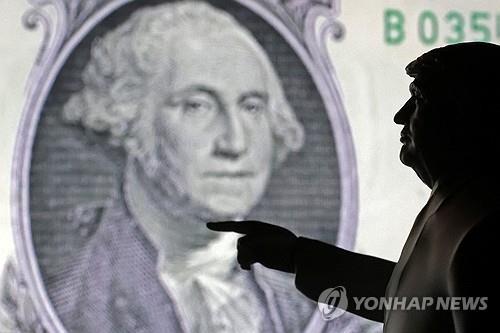
The dollar fell to its lowest level in 4 years as concerns persisted about confidence in dollar assets and as expectations grew that U.S. and Japanese currency authorities could intervene to support the yen.
The dollar index, which tracks the U.S. currency against 6 major peers, was down 1.2 percent at 95.86 near the close of New York trading on ICE Futures U.S.
That was the lowest level since February 2022.
The dollar has extended its weakness for 4 straight sessions after concerns emerged about interference with the Federal Reserve's independence and after U.S. President Donald Trump threatened to annex Greenland, weakening so-called confidence in dollar assets.
As debate has resurfaced on and off Wall Street over a 'sell America' trade or a 'debasement trade', gold prices in dollar terms have continued to rally.
Trump also added fuel to the dollar's decline by saying the dollar was "great" and appearing unconcerned about the recent weakness.
Speaking at the White House before leaving for an Iowa trip, Trump answered "no" when asked by reporters whether he was worried about the dollar's weakness, adding, "I think it's great."
Market participants took it to mean Trump was not concerned about the dollar's recent depreciation. After his remarks were reported, the dollar extended its losses.
Democratic senators also contributed to the dollar's weakness by raising issues with a Department of Homeland Security budget bill, increasing the chances of a federal government shutdown, after the fallout from a fatal shooting in Minneapolis by an immigration agent.
Karl Schamotta, chief market strategist at payments firm Corpay, told Reuters, "As the U.S. government is headed toward another shutdown, policy uncertainty is surging again," adding, "This is leading to a deepening of the 'sell America' trade that has dominated markets all year."
Also in the background was the continued concern that the United States and Japan could intervene in the foreign exchange market to support the yen.
Reuters previously reported on Jan. 23, citing sources, that the New York Federal Reserve had checked the yen-dollar exchange rate with foreign exchange dealers, signaling the possibility of intervention. The U.S. Treasury Department and the New York Fed did not confirm it, but foreign exchange market participants have not lowered their guard over possible official intervention, Reuters reported.
[Yonhap]
 Online Team
d-today@d-today.co.kr
Online Team
d-today@d-today.co.kr