
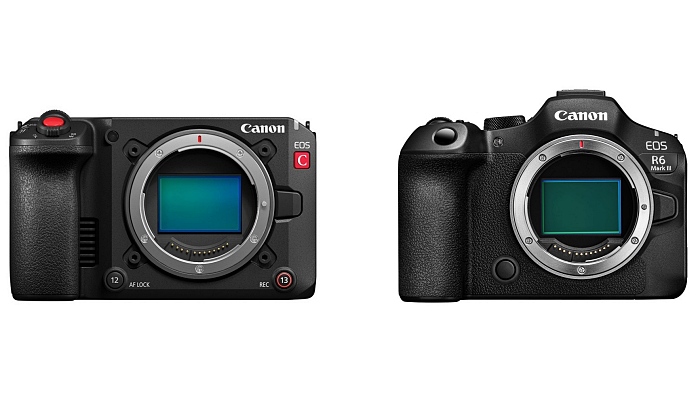
It was a year of heavier burdens for consumers who enjoy cameras due to the effects of inflation, but a look back at the 2025 camera market still shows many meaningful changes. In particular, the benchmark for what had been called “standard” cameras was raised by a step. At the same time, many distinctive models that broke from the existing mold appeared, widening the range of choices.
According to Japan’s ITmedia on Dec. 30 local time, the most noticeable change was that standard (basic) models from major brands were all renewed. These models no longer remained at the entry or mid level. They established themselves as de facto “mainstream flagships” that put high performance and advanced functions front and center. This trend is likely to become a new benchmark for standard cameras over the next few years.
At the same time, many distinctive cameras outside traditional lineups also appeared. It is seen as a shift toward differentiated strategies tailored to preferences and intended use amid competition focused on high performance.
The center of today’s mirrorless camera market is 35mm full-frame sensor models. Based on that, APS-C and Micro Four Thirds (MFT) have emerged as alternatives for users seeking compact systems or reasonable prices. In image quality terms, APS-C has already reached a sufficient level, but full-frame still leads the market mainstream.
The key brands in the full-frame mirrorless market are Sony, Canon and Nikon. These three companies have each used Sony’s “a7,” Canon’s “EOS R6” and Nikon’s “Z6” as standard models. For about 25 years, this lineup has served as a barometer showing each company’s technological direction and trends.
Nikon moved first to change. Nikon launched the “Z6 III” in July 2024, firing the opening shot for renewing standard models. In the fall of 2025, Canon followed with the “EOS R6 Mark III,” and in December that year Sony rolled out the “a7 V,” completing the standard lineups of the three major brands. In particular, the appearance of the “α7 V,” which replaced the “a7 IV” that had been viewed as relatively old, is significant for Sony.
The common features of these new standard models are clear. Ultra-high-speed continuous shooting became possible through pre-burst shooting based on electronic shutters. Subject-detection autofocus using deep learning also became a standard specification. Functions that once belonged only to higher-end models have now come down to the standard tier.
2025 was a year in which the definition of “standard” was rewritten in the camera market. Even as the reality of higher prices weighed on buyers, technological evolution did not stop. Consumers were able to get “basics” at a far higher benchmark than before.
 Jinju Hong
hongjj@d-today.co.kr
Jinju Hong
hongjj@d-today.co.kr