
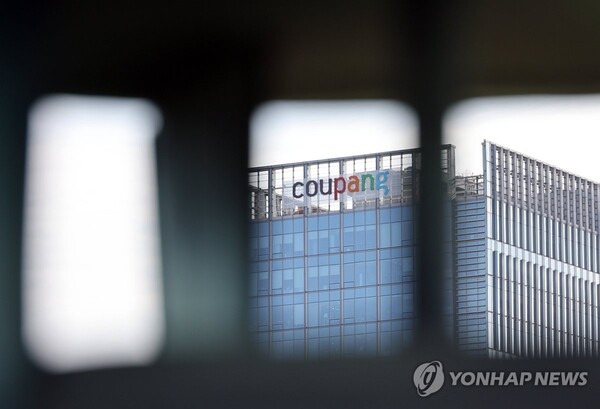
South Korea's Financial Supervisory Service will extend its inspection of Coupang's financial affiliates, Coupang Pay and Coupang Financial, through this month to Jan. 30. The investigation focuses on whether their personal information management system is lawful and whether loan interest rates for merchants are appropriate.
Financial authorities said on Jan. 26 the FSS is closely examining the One ID system in which Coupang and Coupang Pay share accounts. Coupang uses a system that automatically creates an account with electronic financial services provider Coupang Pay when users sign up for its shopping mall, without a separate procedure.
The FSS is also examining whether payment information was improperly shared in the process and whether there are potential violations of the Credit Information Act and the Electronic Financial Transactions Act. Coupang has delayed submitting materials, citing internal procedures at its U.S. corporation, but the FSS stepped up the probe by converting its on-site check into an inspection on Jan. 12.
Coupang Financial's loan product for marketplace sellers, the Seller Growth Loan, is also a key inspection target, it is reported. The product applies an interest rate of up to 18.9 percent a year and has faced criticism over high rates.
Data provided by the FSS to the office of People Power Party lawmaker Kang Min-kook (강민국), a member of the National Assembly's Political Affairs Committee, showed the outstanding loan balance stood at about 13.4 billion won at the end of last year and the average interest rate was about 14.1 percent a year. A key issue in the inspection is whether the practice of recovering principal and interest by using a seller's Coupang settlement funds as collateral in the event of delinquency complies with the Financial Consumer Protection Act.
 Seul-gi Son
sageson@d-today.co.kr
Seul-gi Son
sageson@d-today.co.kr