
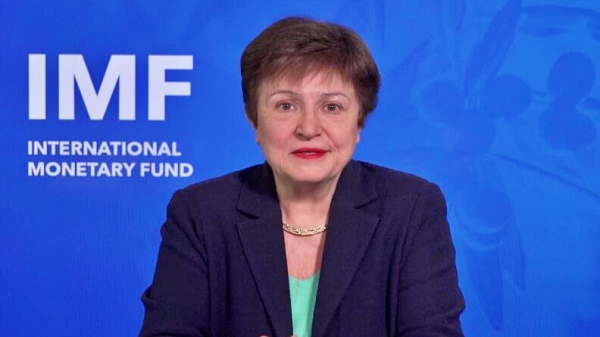
International Monetary Fund (IMF) Managing Director Kristalina Georgieva (크리스탈리나 게오르기에바) warned in a speech at the World Economic Forum (WEF) in Davos, Switzerland, that artificial intelligence (AI) would deliver a “tsunami”-level shock to labour markets.
According to a Guardian report, she said “60 percent of jobs in advanced economies, and 40 percent globally, will be affected by AI,” and forecast that some would be enhanced, some would disappear and a large number would fundamentally change.
Georgieva said AI could be used to boost productivity in skilled, high-paid jobs and could have positive effects on local economies. She said the problem is that AI is mainly replacing entry-level jobs. She raised concern that this would make it harder for young people entering society to find work and that many in the middle class who do not receive productivity benefits could face declines in real wages.
She said, “AI is evolving too fast, but we do not know how to make it safe and inclusive,” and cited a lack of regulation as the biggest risk factor. She added, “AI is real, and we are now falling behind this trend.”
Other participants in Davos also focused on AI’s two-sided nature. Christy Hoffman (크리스티 호프만), general secretary of UNI Global Union (UNI), said, “AI is designed essentially to reduce costs, so it ultimately reduces jobs,” and called for talks with workers before introducing the technology. She said, “We have no intention of stopping AI, but we want to share its benefits fairly.”
Microsoft CEO Satya Nadella (사티아 나델라) stressed that for AI not to lose social trust, it must provide benefits across society, not only to a small number of big tech companies. He argued it should not be allowed to monopolise limited resources such as energy.
European Central Bank (ECB) President Christine Lagarde (크리스틴 라가르드) said U.S.-China rivalry for technological dominance and protectionism are hindering international cooperation on AI technology. She warned, “Because AI is a capital-, energy- and data-intensive industry, if common rules are not established, both overall investment and data use could shrink.” She added that alternatives should be found rather than deepening fractures in the global economy, expressing cautious optimism.
 Chi-gyu Hwang
delight@d-today.co.kr
Chi-gyu Hwang
delight@d-today.co.kr