
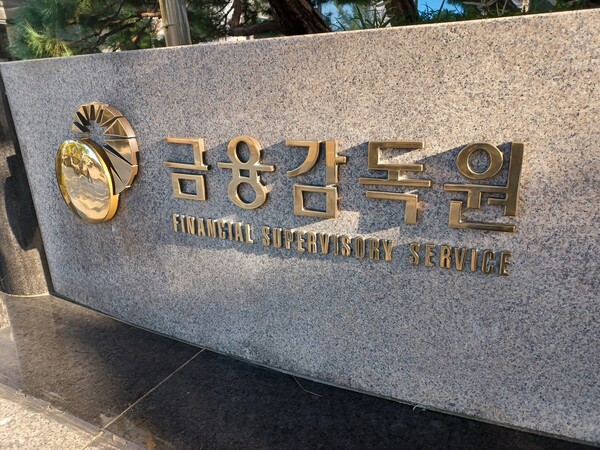
South Korea's Financial Supervisory Service said it will make consumer protection the top priority in its supervision and inspections of the digital and IT sector this year and shift its IT risk management framework to a preventive approach.
The FSS held a 2026 digital and IT financial supervision briefing on Tuesday at its headquarters in Seoul's Yeouido. About 350 people attended, including representatives from financial firms, electronic financial service providers, virtual asset service providers and industry associations.
The briefing was arranged to share supervisory direction in response to changes in the digital finance environment and to discuss key issues by sector.
In Session 1, Hyung-woo Kang (강형우), a professor at Korea University's Graduate School of Information Security, presented on cyber security incident cases and implications in the financial sector. The FSS then explained its 2026 supervision and inspection direction for the digital and IT sector and held a question-and-answer session. In Session 2, it held roundtables by major sectors, including financial firms, electronic financial service providers and virtual asset service providers, to discuss supervision and inspection issues and hear industry views.
In opening remarks, Jong-oh Lee (이종오), deputy governor for the FSS digital and IT sector, said the digitalisation of finance and AI innovation are increasing convenience for financial firms and consumers, but data leaks and system outages are frequent and the risk of IT risk spreading through cloud and software supply chains also remains.
He said the FSS will place the top priority of the 2026 digital and IT sector on consumer protection and create a digital finance environment in which financial consumers can trade with confidence.
To that end, the FSS said it will shift its IT risk supervision paradigm from a focus on post-incident measures to a preventive approach. It also said it will focus on strengthening digital resilience to minimise consumer damage and quickly normalise services when incidents occur.
◆ AI management and internal control systems must be established
On AI, it stressed a balance between innovation and responsibility. Lee said the FSS will support AI innovation in finance from multiple angles given AI's future impact, and improve processes for combining and using data so that high-quality training data can be secured and used more easily. He added that innovation is sustainable only when balanced with responsibility, and urged financial firms to establish AI risk management, ethical awareness and internal control systems.
On the electronic finance sector, it said it will work to establish business order and improve transaction stability. It plans in particular to closely check risk management and internal controls at large electronic financial service providers affiliated with big tech.
On the digital asset market, which it said has 11,000,000 users, the FSS said it will support efforts to restore market trust by actively encouraging improvements in internal controls and computer systems. It said it will also proceed in parallel with preparations for phase-two legislation on virtual assets and strengthen market surveillance capacity by advancing its investigation system.
At the roundtables, participants shared cases of violations of basic IT controls that caused recent IT incidents and discussed 10 key financial IT risks. They also discussed improvements to systems for administrative fines and penalty surcharges and on-the-ground difficulties. At an electronic finance sector meeting, participants addressed ways to foster a sound business environment and strengthen protection of consumer rights and interests. At a virtual asset issues meeting, they discussed progress on phase-two legislation, strengthening self-regulation frameworks and measures to eradicate unfair trading.
The FSS said it will actively reflect industry opinions and proposals raised at the briefing in its supervision and inspection work. It said it plans to continue communication through various channels with financial firms, electronic financial service providers, virtual asset service providers and experts.
 Ji-young Lee
ljy@d-today.co.kr
Ji-young Lee
ljy@d-today.co.kr