
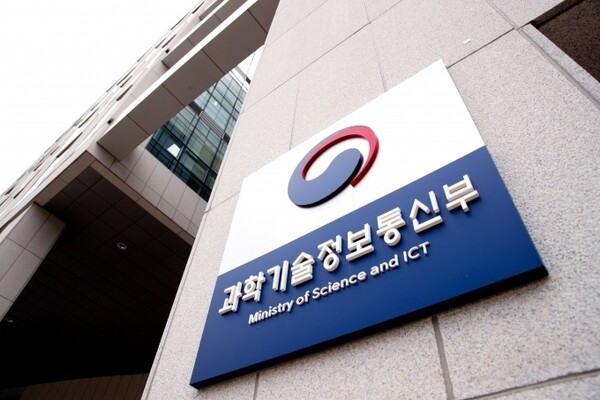
South Korea's Ministry of Science and ICT said on Jan. 21 it has finalised the "2026 fusion research and development implementation plan" and will push it forward in earnest to ensure smooth execution of its fusion acceleration strategy.
The ministry said 2026 will be the year it begins full implementation of development of a "Korean innovative fusion demonstration reactor". It said it will focus its policy capacity on building a virtuous-cycle system in which R&D results spread to demonstration and industry.
To that end, it will invest 112.4 billion won in government funding, up 56.0 billion won, or 99 percent, from 56.4 billion won last year, including by launching 2 new projects.
The ministry will start a design-technology development project for the Korean innovative fusion reactor. Through the project, which receives 2.1 billion won this year, it will derive basic specifications such as power output and device scale, as well as a phased construction schedule, and flesh out a mid- to long-term roadmap for demonstration and commercialisation.
It will launch a new 4.5 billion won project to introduce AI technology across fusion research. By applying AI to plasma control, analysis of experiment and operation data, and the advancement of design and analysis, it will significantly strengthen research efficiency and performance prediction capabilities.
The ministry will also newly support challenging research into diverse fusion approaches beyond existing research centred on the tokamak method. It will continue to support next-generation fusion concept research and, in parallel, foster specialised personnel and expand the research base to underpin it.
It will also push ahead with industry-academia-research cooperation. It will systematise cooperation among government-funded research institutes, universities and companies around the fusion innovation alliance. It will build a "one-team" system by field in the 8 key fusion core-technology areas in the first half and expand corporate participation across the full process of R&D projects.
It will expand the fusion research and industrial base by fostering regional hub industries and strengthening regional cooperation. It will complete construction of a superconducting conductor test facility to strengthen testing and verification capabilities for key fusion components and materials. Through a preliminary feasibility study project, it will push to build fusion demonstration facilities in provincial regions.
It will also accelerate strategy formulation and legal and institutional improvements to support sustainable development in the fusion sector. It will prepare the "AI plus fusion promotion strategy", the "global fusion cooperation strategy" and the "KSTAR 2.0 promotion strategy" to push international cooperation and the advancement of domestic research equipment. It will also clarify the role linking research, policy and industry through a mission-centred functional reorganisation of the Korea Institute of Fusion Energy.
Kim Sung-soo (김성수), head of the ministry's R&D Policy Bureau, said, "Through this implementation plan, we will expand the speed and scope of fusion R&D and systematically 추진 a full-cycle strategy that runs from technology development to demonstration and industrialisation."
 Jin-ho Lee
jhlee26@d-today.co.kr
Jin-ho Lee
jhlee26@d-today.co.kr