
The government will require mobile carriers to provide 5G standalone service as a condition for reassigning 3G and LTE spectrum whose usage periods expire next year. It set the base price at 3.1 trillion won, about 15 percent lower, reflecting expected value reductions from 5G standalone adoption and expansion.
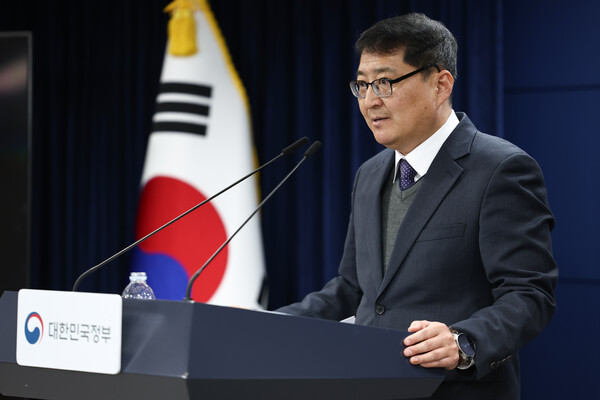
The Ministry of Science and ICT held a briefing at the Seoul Government Complex on Dec. 10 and announced detailed policies for mobile spectrum reassignment.
In June, the ministry decided to reassign all 370 MHz of spectrum whose usage periods end in 2026 to existing users. It formed a research group of experts in economics, management, law and technology to analyse market and technical conditions and review the economic value of the spectrum.
The group said wider 5G standalone use is needed to develop specialised services and prepare for 6G commercialisation and the AI era. KT is the only carrier that has built a commercial 5G standalone network.
The ministry will mandate 5G standalone deployment. Carriers must connect their existing 5G radio stations to standalone core equipment by the end of next year. Newly built 5G radio stations must also be connected to standalone core equipment.
Nam Young-jun, a ministry official, said the government will start compliance checks in 2027, the year after the 2026 deadline for linking to standalone core equipment, and will take follow-up measures based on the results.
The reassigned spectrum has already been valued through auctions or previous reassignments. The ministry referenced the previous base price of about 3.6 trillion won but set the fee at 3.1 trillion won, about 14.8 percent lower, considering the effects of 5G standalone adoption and expansion.
To improve indoor 5G quality, the ministry set investment options tied to the number of indoor 5G radio stations. Fees will be reduced if carriers build new stations after Dec. 1 this year during the reassignment period. If carriers install more than 20,000 indoor stations by the end of 2031, the fee will be about 2.9 trillion won.
The ministry will differentiate usage periods by band. It set three-year terms until 2029 for the 1.8 GHz band at 20 MHz and the 2.6 GHz band at 100 MHz, which may require restructuring to secure wideband spectrum for 6G commercialisation.
These bands will be reviewed again in the 2028 reassignment to determine whether to assign them anew or reassign them. Other bands will retain five-year terms to ensure stable service for current users.
The ministry also prepared measures for flexible spectrum use. Carriers may choose to use 3G spectrum for LTE or higher technologies. For LTE spectrum, carriers may shorten the usage period for one block in the 2.1 GHz or 2.6 GHz bands after one year if user protection is not compromised, considering subscriber and traffic declines.
The ministry plans to revise notices in advance so carriers may use reassigned spectrum for 5G or higher technologies during the usage period if user protection is not affected.
The research group viewed additional 5G spectrum supply as desirable for improving 5G quality, preparing for the AI era and boosting competition in the mobile market. The ministry will present specific supply plans once carrier demand becomes clear.
The frequency reassignment plan does not reflect SK Telecom’s requests. SKT had clashed with LG Uplus over the 2.6 GHz band.
SKT said its fee burden for the same band is about twice that of LG Uplus. LG Uplus argued that changing results that reflect both market conditions at auction and reassignment fees would be unreasonable.
The three carriers accepted the plan but expressed differing views.
SKT said it will prioritise industry development and customers and work to provide the best service, while hoping for long-term improvements to the fee calculation system.
LG Uplus issued a brief statement saying it will do its best to provide service after reassignment.
KT, which already commercialised 5G standalone, viewed the plan positively. It said the measures help advance 5G networks and provide a stable service environment, and that the policy encourages technological evolution at a reasonable level.
KT added that it will focus on improving its standalone network and indoor quality and work to secure competitiveness in future core technologies including 6G and AI.
 Jin-ho Lee
jhlee26@d-today.co.kr
Jin-ho Lee
jhlee26@d-today.co.kr