
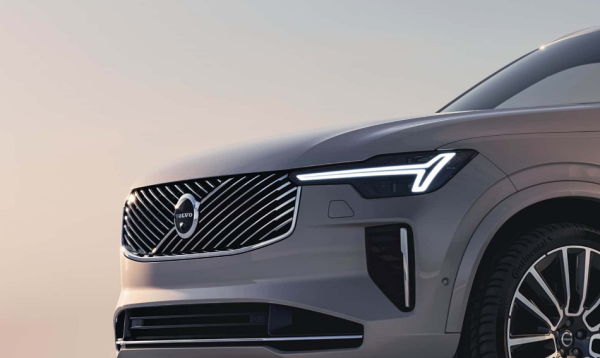
[DigitalToday reporter Jinju Hong] Volvo has released teaser images and key technical specifications for the EX60, an electric version of its best-selling XC60 SUV, ahead of a world premiere event scheduled for Jan. 21. The new model is expected to set a new benchmark in the premium electric SUV market, applying Volvo’s longest driving range and an innovative production method.
According to IT outlet Ars Technica, the EX60 SUV is an electric vehicle that concentrates Volvo’s next-generation strategy. It was developed on an all-new EV-only platform (SPA3) based on a cell-to-body battery pack, large lightweight cast structures and a centralised computing system capable of more than 250 trillion operations per second. It is a “software-defined vehicle (SDV)” in which software-led design is key as well as hardware, and it is a model that symbolises a turning point in Volvo’s EV strategy.
The new electronic and software architecture is called Hugin Core, named after Hugin, one of the two ravens in Norse mythology that gather information about the world for Odin. Volvo global head of software engineering Alwin Bakkenes explained that Hugin Core collects and analyses data from all the vehicle’s sensors and actuators to understand the surrounding environment and predict situations that may occur. Volvo has extended mythical naming from its existing “Thor’s hammer” headlamp design to its technology platform.
Hugin Core is Volvo’s second-generation SDV platform, reflecting experience accumulated from the EX90. Bakkenes said the EX90 launch process was not easy and there were initial issues, but lessons from that process were actively reflected in the EX60. He added that the introduction of the new SPA3 platform and Hugin Core does not mean existing SPA2-based Volvo vehicles will become obsolete, and that a common code-based “superset” technology stack is designed so many functions can be distributed in the same way to SPA2 and SPA3 vehicles.
In its computing structure, Nvidia DRIVE AGX Orin and Qualcomm Snapdragon 8255 SoC are used together. The Nvidia chip handles autonomous driving and advanced driver-assistance functions, while the Qualcomm SoC shares infotainment and various in-vehicle computing tasks. Volvo has built a computing environment that enables large-scale artificial intelligence (AI) inference and flexible workload distribution.
The software experience is also set for major changes. Volvo is one of the brands that adopted Google Automotive Services early, and the EX60 will be equipped with a conversational AI assistant based on Google Gemini. The AI supports natural language interaction such as vague requests when the destination is not exactly known, searching for a song with hazy memories, and explanations of vehicle functions.
The AI agent accurately recognises the vehicle model and specifications, and can access Volvo’s manuals and internal resources as well as external internet information. Its use cases also expand to suggesting navigation by remembering schedules and locations, or checking whether a store has inventory of a specific product. Bakkenes also introduced internal cases of using the “Gemini Live” function to summarise work feedback and maintain context.
Volvo is making clear its goal of delivering an AI-based software vehicle that goes beyond a simple electric car, with functions and value that expand over time. The EX60 is expected to be an important testbed showing the direction of what user experience Volvo, which has prioritised safety as its top value, will present in the era of AI and autonomous driving.
 Jinju Hong
hongjj@d-today.co.kr
Jinju Hong
hongjj@d-today.co.kr