
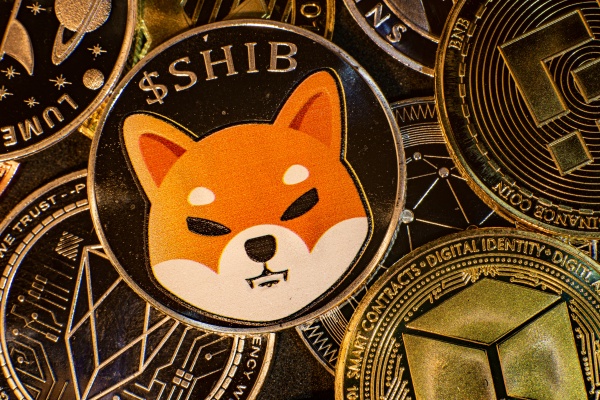
Shiba Inu (SHIB) rose 5.96 percent in a day, stoking expectations for a year-end rebound. But looking at past December returns, there is still a question mark over whether the upswing can extend.
Blockchain media outlet U.Today said on Nov. 23 (local time) that Shiba Inu traded at $0.0000038, based on CoinMarketCap data.
Despite the short-term bounce, the trend is still weak. Shiba Inu is down 8.86 percent over the past 7 days and has fallen 18.5 percent so far in November. Last week it slid to $0.00000337, the lowest level since 2021. The price has rebounded, but the monthly trend remains in a bearish range.
The market is again talking about a December "Santa rally." But Shiba Inu's past December results are far from those expectations. CryptoRank data show Shiba Inu fell 29.5 percent in December 2021 and 13.5 percent in December 2022. It rose 24.6 percent in December 2023, but declined 21 percent and 17.6 percent in December 2024 and 2025, respectively. It posted gains in only 1 of the past 5 Decembers.
In the same data, Shiba Inu's median return in December was minus 17.6 percent and its average return was minus 11.4 percent. The exceptional rise in 2023 came after gains of 6.04 percent in October and 6.62 percent in November. This year, by contrast, it fell 18.6 percent in October and November is still in negative territory. For investors hoping for a year-end rebound, it is a burden that the conditions now differ from past upswings.
Seasonal analysis of the U.S. stock market also sits behind the Santa rally narrative. Goldman Sachs pointed out in last week's report, "GS Flow of Funds: Chopsgiving," that most of the S&P 500's December gains typically appear after Dec. 15. Goldman Sachs analysts described it as a "historical roadmap." The S&P 500 has risen after Dec. 15 in 27 of 36 years since 1990.
Still, it is hard to say year-end seasonality in U.S. stocks will directly translate into moves in meme coins such as Shiba Inu. Shiba Inu's own record actually points in the opposite direction. Even as expectations for December strength grow, the token's long-term statistics have yet to support optimism.
Santa rallies have also lost steam in traditional markets in recent years. Stock Trader's Almanac defines the Santa Claus rally period as the last 5 trading days of December and the first 2 trading days of January, and this season runs from Dec. 24 to Jan. 5, 2027. In the previous period ending on Jan. 5, 2026, the S&P 500 fell 0.11 percent. The almanac wrote at the time, "Santa has failed to show up for 3 years in a row." The S&P 500 also finished lower during the Santa Claus rally periods in 2023 and 2024.
Ultimately, Shiba Inu's year-end path depends less on a short-term rebound than on how much it can pare November's losses and whether risk appetite actually revives after mid-December. Based only on historical data confirmed so far, December is a period in which caution comes before expectations for Shiba Inu.
 Jinju Hong
hongjj@d-today.co.kr
Keyword
#Shiba Inu #CoinMarketCap #CryptoRank #Goldman Sachs #S&P 500
