
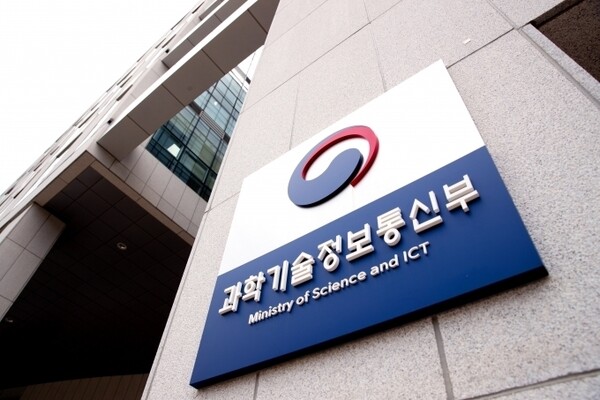
South Korea's Ministry of Science and ICT said on Wednesday it had finalised a 2026 implementation plan for the convergence core technology development programme worth 234.2 billion won and would move ahead in earnest with the project.
This year's plan covers convergence core research, high-temperature superconductivity, supercomputers, science and technology AI and humanoids. Four new projects include development of practical technology for high-temperature superconducting magnets (8.0 billion won), AI+S&T innovation technology development (4.5 billion won), next-generation AI+S&T foundational technology development (2.0 billion won) and advancement of core AI humanoid technology based on public-private cooperation (6.4 billion won).
In the convergence core research area, the ministry will focus support on creative and challenging convergence research aimed at securing key foundational technologies that could change the paradigm of future society.
Under the future promising convergence technology pioneer programme, it will continue support by separating work into convergence new-technology research that can create future new industries within 10 years, and a two-stage approach for challenging topics, comprising a first stage that approaches and verifies feasibility and a second stage that pursues scale-up challenge-oriented research.
This year it will expand investment by selecting and supporting new tasks centred on advanced convergence core research aimed at opening up and pre-empting future new markets and scientifically solving difficult problems. It will also continue supporting convergence core research across various stages and levels, including the BRIDGE convergence R&D programme linking research outcomes with high potential for commercialisation, and the global convergence research support programme for complex problems that are difficult to achieve solely with domestic research capabilities.
In the high-temperature superconductivity area, it will 추진 development and verification of core technologies for high-temperature superconducting magnets that have been under development since 2022. It will also launch a new project to build a foundation for a high-temperature superconductivity industry ecosystem by developing practical technologies for system application in applied fields.
In supercomputers, it will build and operate Supercomputer 6, a key computing infrastructure for big science in research and industry, data analysis and AI R&D. It will pursue securing foundational software technologies to invigorate high-performance computing, as well as support for large-scale and group research using high-performance computing.
In science and technology AI, it will newly launch work including development of specialised AI models to drive R&D innovation in areas where South Korea has strengths such as bio and materials and chemistry, and securing next-generation AI-based technologies that improve research efficiency and accuracy.
In humanoids, it will newly launch a technology development project for humanoids with human-level behavioural autonomy. Based on public-private cooperation, it will integrate and develop key element technologies for humanoids, including AI, software and hardware, in a package format.
Under the finalised implementation plan, the ministry will actively support development of core technologies in convergence core research, high-temperature superconductivity, supercomputers and science and technology AI. It plans to provide details related to this year's new project notices later this month through the Korea Research Foundation website.
 Jinho Lee
jhlee26@d-today.co.kr
Jinho Lee
jhlee26@d-today.co.kr