
So-called horizontal products that companies in any industry can use have led the B2B software-as-a-service market. The landscape around vertical SaaS specialised in specific industries appears to be growing.
In global markets, vertical SaaS companies of some scale have already emerged. In South Korea, companies that highlight vertical SaaS as a core strength are also appearing.
Integration, which runs an integrated operations platform for Korean medicine, is one of them. Integration developed Upstream, a B2B SaaS that supports digital transformation at small Korean medicine clinics, and recently began a beta service. It is also drawing attention by stressing it aims to become an operating system for Korean medicine doctors beyond an EMR solution based on Upstream.
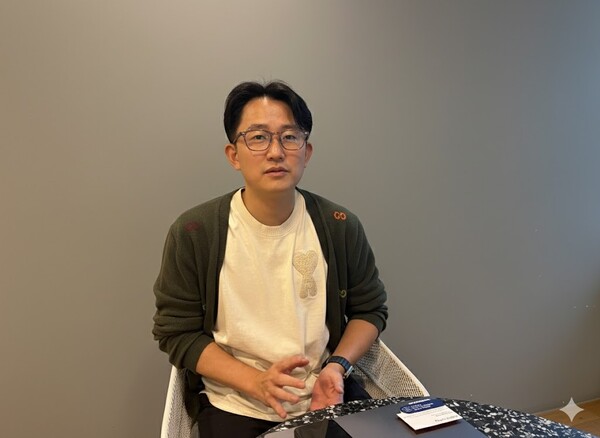
Jong-yeon Kim, the Integration team leader who oversees Upstream's development, said Korean medicine clinics hold a lot of valuable data but few use it properly. He said Upstream will help clinics turn data into meaningful forms and solve various problems.
Integration, which recently raised 27.5 billion won in investment, has grown by providing the community portal platform Medistream for Korean medicine clinics and doctors, as well as Korean medicine brands such as Su, Lynda Diet and Acurex. Medistream provides content specialised for Korean medicine doctors as well as commerce functions.
Integration, an integrated operations platform for Korean medicine, raises 27.5 billion won from Altos Ventures and others
Upstream reflects Integration's expansion into software specialised for Korean medicine clinics. Kim said it would be a worthwhile bet if clinics are supported to use data in a standardised environment.
He said Korean medicine clinics have a lot of unstructured data, but cannot systematically collect it because it is not standardised. He said differences in how data is recorded make it difficult to implement better medical services based on data. He said Upstream supports a standardised way of using data while each medical institution continues to own its data.
According to Kim, Upstream is a B2B SaaS that integrates an EMR with customer relationship management functions optimised for Korean medicine clinics, among other features, and is differentiated from existing EMR solutions.
Kim said many Korean medicine clinics used to record treatment details on paper charts and handle claims that way. He said EMR software currently on the market focuses on replacing paper and submitting claims to the National Health Insurance Service. He said it is hard for such systems to cover various workflows beyond claims and customer relationship management, which is becoming more important. Kim added that services specialised for patient management are also emerging, but often do not integrate with the electronic charts used by Korean medicine clinics. He said Upstream can also address these problems and prevent work from becoming fragmented.
Integration developed Upstream with a focus on solving problems properly and cheaply even for small clinics. It is still adding functions. Kim said Korean medicine clinics have many special aspects in the treatment and examination process. He said it also provides a function that guides clinics to file claims effectively, taking into account different standards for claims for Korean medicine procedures.
Upstream is provided only as SaaS, not as an installed system. Kim said installed EMR systems are often based on older technology stacks and are less flexible. He said Upstream provides everything other than the claims function on a SaaS basis that supports government cloud regulations.
Integration plans to expand the Upstream beta service and launch it formally in the first half of the year. Kim said many Korean medicine doctors are both medical professionals and self-employed small business owners. He said he wants Upstream to help medical professionals focus on medical care. He said it will also expand a competitive consulting service so clinics can make data-driven decisions.
Kim, himself a former Korean medicine doctor, also oversees planning for the Upstream service. He is also highly interested in the use of AI. He expects AI to bring big changes to the work planners do. He said the biggest appeal for planners is being able to review data and materials in a short period using AI. He said there are business decisions that AI cannot solve, but AI is changing traditional development and planning work. He said as services grow, definitions for each part become important and there must be no contradictions between parts, and that AI is much faster and cheaper than people at finding them. He said this has increased the time he has to generate ideas or think about other businesses.
 Chi-gyu Hwang
delight@d-today.co.kr
Chi-gyu Hwang
delight@d-today.co.kr