
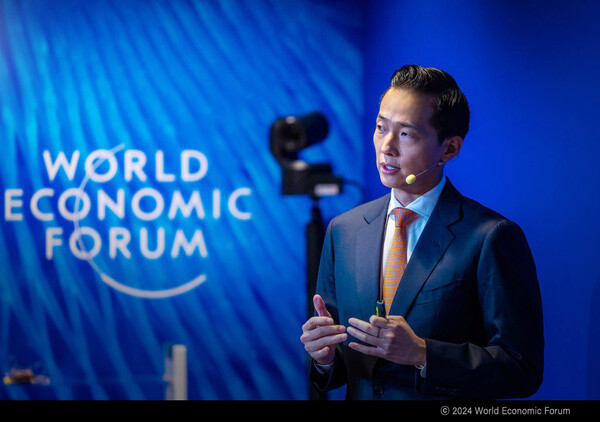
Hanwha Group proposed a plan to build a zero-carbon maritime ecosystem centered on electric-propulsion ships. Dong-Kwan Kim, vice chairman of Hanwha Group, posted an article outlining the proposal on the Davos Forum's official website. The Davos Forum is set to hold its 56th annual meeting on Jan. 19.
In the article, Kim presented specific steps, including developing electric ships, developing energy storage systems (ESS), building port charging infrastructure and installing decarbonised energy supply facilities. After proposing a zero-carbon propulsion gas carrier at the Davos Forum annual meeting in 2024 as a global industry first, he has now attempted a comprehensive approach that encompasses the broader maritime ecosystem.
Kim cited the International Maritime Organization's 2050 net zero target and tighter European Union rules on carbon emissions. Shipping companies must secure emissions allowances for all carbon emissions from 2027 onward. He stressed that while companies can respond in the short term with transitional methods such as onboard carbon capture, they must fundamentally shift ship power systems.
Kim said a stable ESS is essential for the full-scale spread of electric ships. He said accessible battery charging and replacement infrastructure is needed. He also proposed building a power supply system at ports based on clean energy.
Kim said, "Shipping decarbonisation cannot be achieved with a single technology or policy," and added, "Cooperation across the entire value chain, spanning shipyards, port stakeholders, energy suppliers and policymakers, is important."
Hanwha Group is participating in the decarbonisation of the shipping industry based on its shipbuilding and energy technologies. Kim said, "Hanwha Ocean is pushing to develop zero-carbon ships applying innovative technologies such as ammonia gas turbines," and added, "By applying advanced ESS and clean energy solutions across maritime infrastructure, we are laying the groundwork for ships and ports to evolve together with the broader ecosystem." He said the group is discussing a pilot project with European port authorities to provide ESS and ship-charging facilities using clean energy.
Kim said, "Companies and institutions that proactively apply new technologies and business models will play a key role in setting the market's direction," stressing the importance of leading investment. He said, "Public-private cooperation is an essential element in the industrial changes needed to reach net zero," and forecast that commercialisation will only open up with close public-private collaboration.
 Daegeon Seok
d2dg@d-today.co.kr
Daegeon Seok
d2dg@d-today.co.kr