
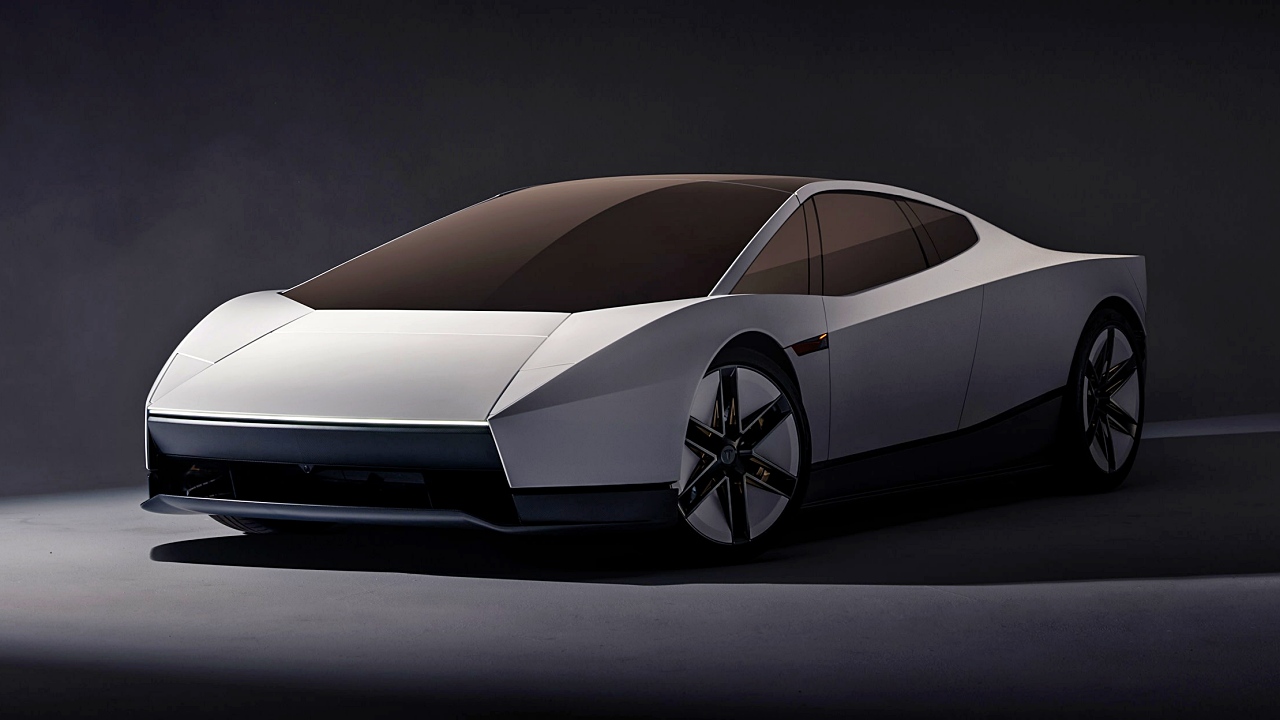
[DigitalToday intern reporter Seung-a Yoo] Tesla plans to equip its new Roadster with the most advanced high-voltage battery pack it has ever used.
On Oct. 19, electric vehicle media outlet InsideEVs reported that the new Roadster aims to deliver both high-output driving and ultra-fast charging by using in-house 4680 cylindrical battery cells and an upgraded thermal management system.
At its unveiling, SpaceX technology-based cold gas thrusters and a powerful intake system drew attention, but the key that supports real-world driving performance is the battery. Tesla Vice President of Engineering Lars Moravy (Lars Moravy) described the Roadster battery, saying, "It puts into one thing everything Tesla has learned from making EVs for more than 20 years."
The exact capacity of the battery pack has not been disclosed, but Tesla has indicated a driving range of more than 300 miles, about 483 km, and strong charging and discharging performance. Moravy said batteries for mass-market models such as the Model Y and Model 3 focus on lifespan, while the Roadster battery prioritises power density and performance. The cells are Tesla's in-house 4680 format, with a customised chemical design tailored for high-power charging and discharging. The materials, however, remain lithium-ion and nickel-based as before.
The thermal management system is also a core technology. The rear-wheel dual-motor setup on higher trims produces a peak output of 1,341 horsepower and maximum torque of 1,032 pound-feet. To prevent battery cells from heating up quickly in high-output conditions, Tesla applied double-sided coolant tubes to each cell.
Materials in the battery pack were also configured with weight reduction and heat dissipation in mind. The cell casing uses an aluminium can that is lighter than steel and disperses heat well. A titanium plate that is lighter and thinner than steel and offers strong insulation performance was applied to the top of the pack. The skid plate protecting the underside of the vehicle kept aluminium to withstand denting and impact.
The design also affects charging performance. Moravy said, "It will take about 10 minutes to charge from 15 percent to 85 percent." Peak charging power has not yet been finalised. Moravy said it could be between 500 kilowatts and 1 megawatt, and he also suggested a voltage architecture in the range of 800 to 1,000 volts. Exact figures were not disclosed.
The new Roadster focuses on high output and charging performance, unlike mass-market models that prioritise battery life and cost efficiency. Key specifications such as battery capacity, peak charging power and voltage architecture have not yet been disclosed. Whether the technology could later be applied to Tesla's mass-market models is an issue of interest.
 Seung-a Yoo
ysah@d-today.co.kr