
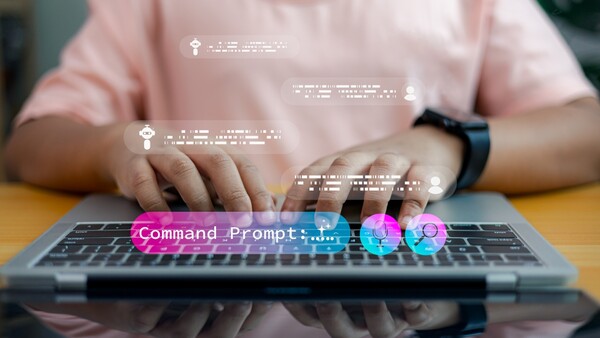
A former Microsoft executive has advised that when using artificial intelligence at work, it is better to focus on reviewing counterarguments, summarising long documents and organising unnecessary data than to entrust it with creative tasks. He said the effective approach is to reduce repetitive work while maintaining human judgement rather than trusting AI output unconditionally.
Business Insider reported on Oct. 19 that a leadership adviser who served as a vice president for human resources at Microsoft presented three ways executives can prioritise AI use in practice as companies rapidly distribute AI tools to employees.
The first is using AI as a tool to check counterarguments and different perspectives. He said AI often produces ordinary and cliched output in creative work such as writing or generating images, but can be useful at the stage of reviewing existing claims.
He recommended asking AI, "What did I miss?" and "Tell me what is wrong," to check one’s judgement. He said deliberately requesting counterarguments, rather than only getting answers that agree with one’s claims, can help identify weaknesses before discussing with colleagues or making decisions.
Even if AI fails to pinpoint problems accurately, examining an issue from another perspective can itself be helpful. He said he does not have AI make his arguments for him, but said it is useful to be able to quickly check another viewpoint when needed.
The second is compressing long documents and answers into key points. He said summary functions can help quickly grasp essential content when AI-written documents become overly long or when even simple questions draw long-winded answers.
He stressed that AI-generated summaries should not be taken as complete explanations. He described first using a summary to identify the main points and then returning to the original text to check the actual grounds and details. He said repeatedly summarising AI-generated long documents with AI may look iterative, but it is effective in reducing time spent selecting the essentials.
The third is organising and classifying accumulated data such as files and emails. He said tasks like sorting, filtering and categorising, where rules are relatively clear and work is repetitive, are areas where AI’s strengths currently stand out.
He said that when moving data to a new computer system, he used AI to review existing programs, files and configuration lists and found a large amount of unnecessary data accumulated over decades. He said that after examining gigabytes of programs, files and settings, he excluded about 90 percent of what was to be transferred.
He advised that AI can also be used to review the overall situation when 8,000 emails have accumulated in an inbox or when a document folder has become excessively bloated. He drew a line between delegating data organisation and classification and allowing AI to automatically execute actual actions.
He said, "I do not let AI automatically send emails, texts or documents," and added, "I never delegate such tasks without careful review." He said a person should make the final decision on important actions such as sending or deleting after checking AI’s organised results.
The advice focuses on how to distinguish between the scope of AI use and the human role as companies expand AI adoption. He said workplace efficiency can be improved by having AI support repetitive work such as reviewing counterarguments, summarising and organising data, rather than fully entrusting it with creative work and judgement.
He said the core of using AI is not having it do everything in one’s place. His advice was to use AI to sift essentials from vast information, check what was missed and filter out unnecessary data, while ensuring that people control important judgement and execution.
 Jinju Hong
hongjj@d-today.co.kr