
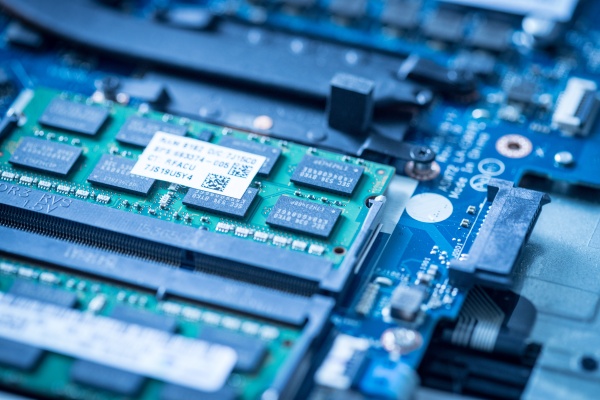
A surge in RAM prices is a negative for PC buyers and upgrade demand, but some analysis suggests it could be a positive change for consumers who have grown tired of marketing for "AI PCs" built around generative AI.
According to IT outlet Ars Technica on Jan. 13, rising data centre demand combined with an AI boom has worsened shortages of RAM and flash memory chips. It expects PC memory and storage costs to rise 40 to 70 percent in 2025. As memory makers focus production on higher-value products for AI servers and data centres, the consumer PC market is coming under direct price pressure.
Market research firms Omdia and IDC forecast global PC shipments will each rise in the 9 percent range in 2025, but expect market volatility to increase further in 2026. IDC said PC makers are likely to raise product prices 15 to 20 percent to respond to the RAM shortage, while also lowering average memory specifications. Omdia also expects manufacturers to cut memory and storage configurations in mid- and low-priced models to protect margins.
The memory shortage is also having a direct impact on the AI PC market. Manufacturers tried to create new replacement demand by promoting on-device generative AI functions, but consumer response has fallen short of expectations. IDC analyst Jitesh Ubrani said, "Interest in AI PCs was already slowing, and the RAM shortage will accelerate that trend." He added, "As cloud-based AI services become widespread, the need for local AI has become relatively lower."
AI PCs that require high-end memory are bound to become less attractive as the price burden grows. With forecasts that RAM prices will be hard to stabilise until 2027, expectations for AI PCs that require at least 16GB of memory as a baseline are also falling.
Strategy shifts by PC makers reflect that mood. Dell last year temporarily suspended its XPS brand to respond to changes in the AI PC market, but revived it at CES 2026 and revised its direction. Dell chose a marketing strategy focused on traditional PC values such as battery life, display quality and overall fit and finish rather than AI functions. Kevin Terwilliger, a vice president in Dell's PC business, said, "Consumers want tangible performance improvements rather than abstract AI functions."
Microsoft is also adjusting expectations for AI PCs. The Information reported that Microsoft CEO Satya Nadella expressed disappointment internally with the quality of the consumer version of Copilot, saying its email and productivity app integration was not as smart as expected.
The industry is seeing the combination of a RAM shortage and slowing consumer demand as pushing AI PCs into a phase where they must prove practical value rather than serving as a short-term marketing keyword. Until memory supply normalises and price pressure eases, analysis suggests AI PCs are more likely to step back from being a core driver of the PC market and go through a period of reorganisation.
 Jinju Hong
hongjj@d-today.co.kr
Jinju Hong
hongjj@d-today.co.kr