
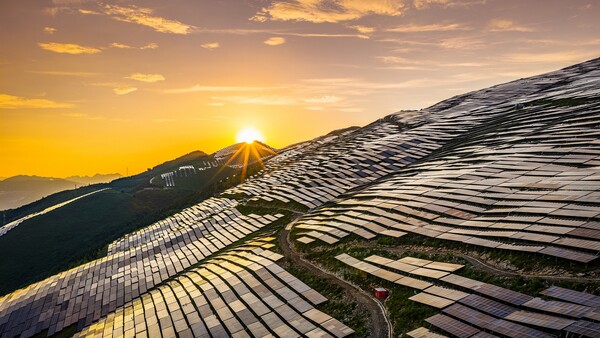
As electrification technologies such as solar power and electric vehicles spread, the yardstick for global energy security is changing. Analysis says the focus is shifting from stable imports of fossil fuels such as oil and natural gas toward securing generation facilities and power grids and diversifying supply chains.
Cleantechnica reported on Oct. 18 that energy strategy expert Michael Barnard (마이클 버나드) assessed that "electrification is fundamentally changing the structure of energy dependence among countries."
Under the traditional fossil-fuel system, oil and gas had to be imported again each time they were consumed. By contrast, solar panels, batteries and electric vehicles can be used for a long period once imported. The explanation is that using domestic solar, wind and hydropower can reduce the burden of repeated fuel imports.
A key example is Pakistan. Pakistan's central bank estimated installed solar capacity at about 50 gigawatts at the end of 2025. It said solar expansion cut energy import costs by about $7.1 billion over the past 6 years and could reduce them by an additional $5.2 billion to $7.8 billion this year.
Electric vehicles are also reducing reliance on oil. The International Energy Agency said global electric vehicles replaced oil consumption of about 1.7 million barrels a day in 2025. China accounted for about 1 million barrels.
In Europe, cross-border power-grid links are being used as a way to strengthen energy security. Ukraine and Moldova connected to the continental European power grid in 2022 soon after Russia's invasion to secure a basis for external power support.
Clean energy equipment adoption is also expanding in Africa. Imports of solar modules, batteries and electric vehicles in 2022 to 2024 exceeded $12 billion. Still, the fact that more than 90 percent of solar modules are made in China is cited as a new supply-chain risk.
Barnard stressed, "It is important to secure supply diversification, domestic production capacity and power-grid resilience rather than complete energy self-sufficiency." Analysis says that in the era of electrification, national competitiveness could be determined by a system that can produce and supply energy reliably rather than the ability to keep buying fuel.
 Jae-won Choi
ittt_0801@d-today.co.kr