
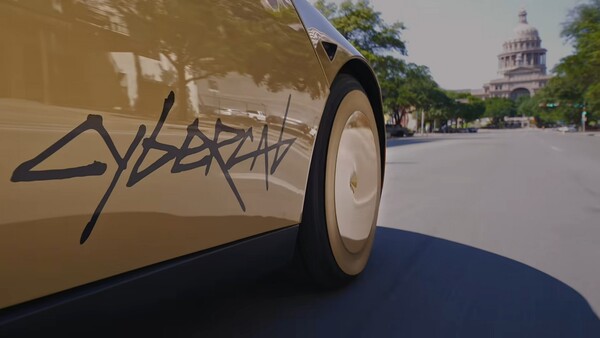
Tesla's fully self-driving robotaxi Cybercab is touring major Australian cities for an exhibition, but the transport industry is strongly opposing the introduction of driverless vehicles. Job losses from the spread of autonomous driving and safety issues have emerged as key points of contention.
Cleantechnica reported on Oct. 17 local time that Tesla is showcasing the Cybercab in major Australian cities including Brisbane. The Cybercab is a two-seater with no steering wheel or pedals and is displayed for about a week at exhibition venues in each city.
A schedule for actual road driving or commercial service has not been confirmed. Tesla previously held a touring exhibition of the Cybertruck in Australia but has not officially sold it as of about 2 years later.
Australia's Transport Workers Union (TWU), together with Uber, is calling for tighter regulation on the introduction of driverless robotaxis. The union said, "7 out of 10 members oppose driverless vehicles," and warned the government about the possibility of job losses.
It demanded, in particular, that human safety officers be placed in vehicles, that transport workers be retrained, and that workers who lose jobs to AI receive financial compensation.
Uber prefers a mixed transport system in which autonomous vehicles and human drivers coexist rather than an approach operated only with fully driverless vehicles. Analysts say interests are also at work in seeking to check the spread of rival Waymo's driverless robotaxis.
In politics, there are also positive reactions to introduction. New South Wales Premier Chris Minns (크리스 민스) said, "I would be willing to ride in a robotaxi," and assessed that it could help Sydney.
But regulatory preparation remains a task. The Australian government is preparing a new legal framework to clarify responsibility for safety management of fully autonomous vehicles. Under the current system, fully driverless operation on general public roads is not permitted.
The Cybercab's entry into the Australian market is expected to depend not only on technical completeness but also on how it resolves safety regulation and employment issues for transport workers.
 Choi Jae-won
ittt_0801@d-today.co.kr