
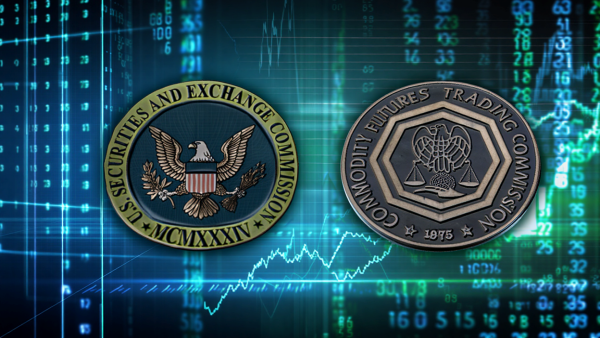
The U.S. Securities and Exchange Commission and the Commodity Futures Trading Commission have recently rolled out a series of regulations with a pro-cryptocurrency character, accelerating market institutionalisation. A new issue has emerged over whether they can withstand court review and a change of administration.
On Oct. 15 local time, blockchain outlet Cointelegraph reported that formal rules are likely to endure if they are crafted within legal authority. It said interpretive guidance or documents at the level of FAQs can be revised or withdrawn more easily.
The backdrop to the debate is the failure of a final Senate vote on the Clarity bill. Two days after the vote, the SEC unveiled a five-year exemption allowing the issuance and trading of stock tokens. After that, crypto exchange OKX joined hands with Intercontinental Exchange to pursue trading in 63 New York Stock Exchange-listed stocks, and Securitize released 12 stocks including Apple, Nvidia and Microsoft.
The SEC provided guidance saying a token is not classified as a security simply because an issuer redeems the token. It also said liquid staking tokens do not qualify as securities, and proposed new rules related to crypto custody.
The CFTC then moved to apply registration exemptions to some crypto software providers. It also presented a plan to create a new registration category for a "crypto asset market" and to allow leveraged trading at registered exchanges.
The question is how long these rules can last. TD Cowen has warned that agency rules are the policy tool that can be most easily withdrawn. Commissioners appointed by U.S. President Donald Trump reversed policies from former Chair Gary Gensler's tenure. A 2024 Supreme Court ruling also narrowed the scope for deferring to agencies' legal interpretations, creating conditions for courts to scrutinise agency rules more strictly.
Yuri Brisov of D&A Partners said the SEC and the CFTC, in principle, have the authority to enact rules. He cited rulemaking authority under the Securities Exchange Act of 1934 and said it is their duty to determine how laws are applied in line with new technology.
He then said simple opposition is not enough for a court to invalidate a rule. Companies or investors claiming harm must prove that the rule imposes an excessive burden. He said the SEC has broadly gathered views from crypto companies and venture investors, and assessed that the current rules were not made overnight.
Even if a future SEC reverses existing rules, it would need grounds and procedures. Brisov said if companies have made large-scale investments in infrastructure to comply with new rules, a successor commission must also consider the impact. He said rules whose growth potential and market benefits have been confirmed cannot be easily overturned.
By contrast, FAQ documents carry relatively less legal weight. Brisov pointed out that the SEC's recent FAQ on issuers' token redemption cannot be viewed as the same as legislation or formal rules. The document was revised within a week after legal counsel for a16z highlighted problems.
That means the market should look not only at the content of pro-crypto policy but also at the form of the norms supporting it. For formal rules that change market structure, such as tokenised stocks, staking, custody and exchange registration, procedures and grounds matter both in enactment and withdrawal. By contrast, FAQs or non-binding guidance can change relatively easily. Even if U.S. crypto institutionalisation accelerates, whether it takes hold is expected to be affected by court rulings and future policy changes by regulators.
 Yoonseo Lee
yslee@d-today.co.kr
Yoonseo Lee
yslee@d-today.co.kr