
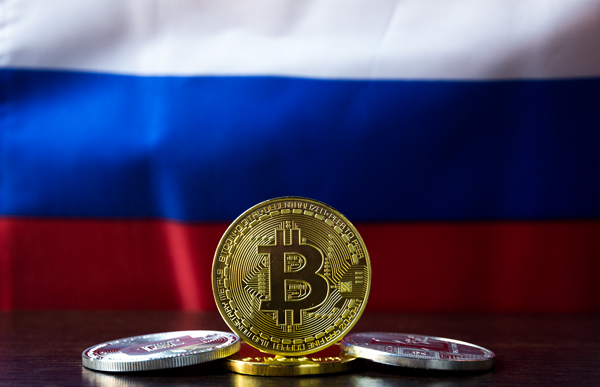
Russia will ban direct cryptocurrency transactions between individuals from July 2027.
Cointelegraph, a blockchain outlet, reported on Oct. 15, local time, that the Bank of Russia has decided not to allow peer-to-peer trading from July 1, 2027, in which individuals directly exchange cryptocurrencies without intermediaries. Under the measure, retail investors will be able to buy and sell cryptocurrencies only through approved intermediaries.
The Bank of Russia also reaffirmed that moving cryptocurrencies from a digital account to a self-custodied, non-custodial wallet in a person’s own name will not be allowed. This means the rules will cover not only transaction routes but also how assets are moved.
The move comes as Russia expands a regulated cryptocurrency market. The Bank of Russia on the same day approved Sberbank, Russia’s largest bank, to provide cryptocurrency exchange services. Sberbank has already been approved as a digital asset custodian.
The backdrop is new cryptocurrency regulation that took effect from Sept. 1. Under the system, exchange operators and custodians came under central bank supervision. Russia, however, continues to ban using cryptocurrency to pay for goods and services. The structure is to manage trading and custody within the system while blocking its use as a payment method.
Some in the market have raised questions about how effectively the rules can be enforced. Industry officials have pointed out that restricting peer-to-peer trading and self-custodied wallets may not be easy to enforce. Samson Mow (샘슨 모우), CEO of Jan3, has said peer-to-peer trading is more resilient to regulatory crackdowns than centralised platforms. Stefan Uhrek (스테판 우헤릭), an executive at SatoshiLabs, also said that even if wallet apps are banned, hardware wallets and desktop wallets may not be affected.
As a result, Russia’s cryptocurrency market is more likely to be reshaped around licensed operators. Retail users’ choices for trading methods and custody may narrow. A key question will be how much trading moves into the central bank’s oversight framework, and to what extent restrictions on peer-to-peer transactions and self-custodied wallets are applied in practice.
 Yoonseo Lee
yslee@d-today.co.kr
Yoonseo Lee
yslee@d-today.co.kr