
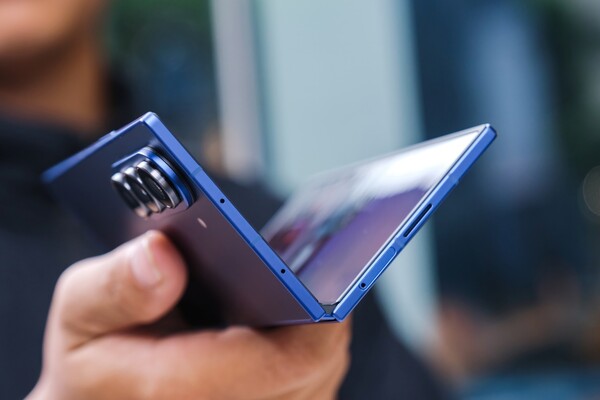
The most important thing to avoid when using a foldable phone is closing the device while foreign material is trapped between the screens. Not only visible items such as cards or coins, but also small particles such as dust and sand can damage the folding display.
On Oct. 6 (local time), IT outlet Engadget reported that the inner display of a foldable phone is structurally different from the hard front glass of a standard smartphone. Because the screen is designed to fold and unfold, users should also avoid pressing hard on the surface or scraping away debris with a fingernail.
It is especially important to check that nothing is between the displays before closing the screen. Large objects such as cards or keys are easy to spot, but small particles such as dust or sand are less visible and may be folded inside.
The risk from debris increases outdoors. In sandy or dusty environments such as beaches or construction sites, small particles can enter gaps in the device. If those particles apply pressure to the screen during folding, they could leave marks or cause damage to the display.
Protection levels against foreign material also vary by device. The Galaxy Z Fold8 and Fold8 Ultra have an IP48 rating, while the iPhone Duo has an IP68 rating. In IP ratings, the first number indicates the level of protection against solid debris. A 4 means protection against objects 1 mm or larger, and a 6 means complete prevention of dust entering the device.
Users should also avoid removing the inner protective film on their own. The film attached by the manufacturer may look like ordinary shipping protection, but Samsung Electronics recommends not removing the inner screen’s protective layer. Adding an unverified protective film may also be inappropriate.
That is because protective films or accessories not designed specifically for foldable phones may not fit the screen structure. For a stylus, it is safer to use a product that the manufacturer says is compatible with the model.
Users should also not be reassured by fold-durability figures emphasized by manufacturers. Smartphone makers typically run tests that fold the hinge and display hundreds of thousands of times. Assuming a device is folded 100 times a day, 200,000 folds is about 5 years and 500,000 folds is about 14 years.
Samsung Electronics has said the Galaxy Z Fold7 display continued to operate after 500,000 folds in laboratory tests. But those figures are test results under specific conditions and do not guarantee the same lifespan in real-world use.
In early foldable phones, there were cases where problems emerged faster than expected even though manufacturers highlighted fold durability of around 200,000 cycles. Water and dust resistance ratings can also change over time depending on how much the device wears.
The most important part of caring for a foldable phone is not complicated. The basics are checking for debris between the screens before folding, and not pressing hard on the inner screen or scraping it with a fingernail. If dust is present, it is better to wipe it carefully with a soft cloth before folding.
A foldable phone is not necessarily a product that must always be handled with extreme caution. It can be seen as a device that requires usage habits suited to its structural characteristics, including a folding display and moving hinge.
 Jinju Hong
hongjj@d-today.co.kr
Jinju Hong
hongjj@d-today.co.kr