
[Digital Today reporter Jae-won Choi] The AI industry must generate $6 trillion in annual revenue by 2031 to bear the currently expected scale of infrastructure investment, an analysis shows. Existing AI services alone would struggle to cover it, making the creation of new markets a key task.
On Oct. 4, according to IT media outlet TechRadar, consulting firm Bain & Company projected that AI infrastructure spending on data centres, processors, memory and networks could rise to $1.5 trillion a year by 2031. Assuming infrastructure investment accounts for about 25 percent of revenue, the calculation suggests about $6 trillion in annual revenue would be needed to support it.
Existing AI businesses are not enough. Bain estimated consumer AI subscriptions and advertising could generate $200 billion to $400 billion, while enterprise AI in areas such as software development, sales and customer support could create $1 trillion to $1.4 trillion. Even adding the maximum figures totals only $1.8 trillion, meaning the remaining roughly $4.2 trillion would need to come from new markets such as innovation in search and advertising, autonomous driving and industrial automation, physical AI such as robots and digital twins, and new drug development and energy.
Investment is also rising to speed up companies' use of AI. Leading AI companies are investing at least $9.75 billion in a "forward deployed engineering" model in which they send engineers directly to customers to support AI adoption.
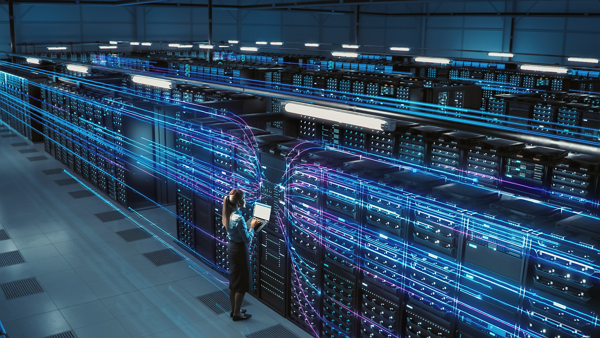
The pace of infrastructure expansion is also steep. Bain assessed that the scale and cost of major AI data centres are nearly doubling about every 12 to 16 months. In the process, the burden of securing power generation and transmission networks, advanced semiconductors and skilled workers is also rising at the same time.
Epoch AI projected that if current trends continue, the world's largest AI supercomputer in 2030 could use about 2 million AI chips and 9 gigawatts of power, with hardware costs alone reaching $200 billion. The analysis says the sustainability of the AI investment race ultimately depends less on massive computing facilities themselves than on how quickly the industry can create new economic value to justify them.
 Jae-won Choi
ittt_0801@d-today.co.kr
Jae-won Choi
ittt_0801@d-today.co.kr