
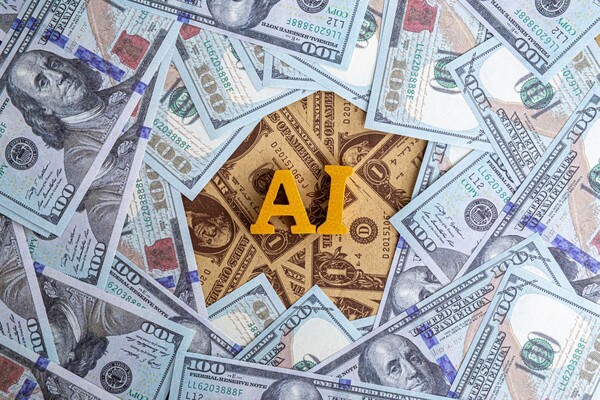
In the U.S. artificial intelligence industry, calls to slow development are colliding with an expansion in large-scale investment. Attention is focusing on the ripple effects an AI slowdown could have across the U.S. economy.
On Oct. 5 (local time), blockchain outlet Cointelegraph reported that the five biggest U.S. AI hyperscalers are expected to invest $800 billion (about 1,070 trillion won) this year to build AI infrastructure.
The central issue is the balance between AI safety and development speed. Dario Amodei (다리오 아모데이), chief executive of Anthropic, argued that the pace of cutting-edge AI model development should be adjusted to give safety research time to catch up. A proposal made in September last year included independent evaluators within AI labs, shared safety standards, restrictions on developers in democratic countries, and international cooperation including with China.
Sam Altman (샘 알트먼), chief executive of OpenAI, Demis Hassabis (데미스 허사비스), co-founder of Google DeepMind, and Elon Musk (일론 머스크), founder of xAI, also agreed with the proposal. Amodei, however, said the goal was not to halt AI model training and technological progress itself, but to adjust the pace of progress in frontier models.
In politics, there are also calls for stronger regulation. An "Artificial Intelligence Superintelligence Prohibition Act" introduced on Sept. 23 by Senators Bernie Sanders (버니 샌더스) and Representative Greg Casar (그레그 카사르) would halt advanced AI development until federal safety rules are established and permanently ban the development of superintelligence. Senator Elizabeth Warren (엘리자베스 워런) also called for an immediate stop to development.
U.S. President Donald Trump, by contrast, opposes slowing the pace of development. Warning that regulation could benefit China, he cautioned: "Don't kill the golden goose." Mark Zuckerberg (마크 저커버그), chief executive of Meta, said each lab should decide its own safe pace of development. Nvidia CEO Jensen Huang (젠슨 황) also backed rapid development, while saying companies could halt development if products are unsafe or control is uncertain.
Amid the standoff, the U.S. government and the AI industry opted for a voluntary safety management system rather than a blanket development halt. Trump and executives at major AI companies signed a voluntary safety agreement on Sept. 29 focused on internal controls, independent audits and oversight. It did not include an industrywide joint pause in development.
Markets are also paying attention to how a slowdown in AI investment could affect the economy. SoftBank recently issued bonds worth $10 billion (about 13.433 trillion won) and 1 billion euros (about 1.507 trillion won) to raise funds to invest in OpenAI. Reuters reported that the sale was the largest among Asia-Pacific and Japan non-financial corporates and ranked in the top 20 globally for corporate bond issuance this year. SoftBank invested about $54.6 billion (about 73.344 trillion won) in OpenAI through the end of July.
AI investment has also taken a larger share of U.S. economic growth. A January analysis by the Federal Reserve Bank of St. Louis found that broad AI-related investment accounted for 39 percent of the increase in U.S. real gross domestic product in the first 9 months of 2025. Some have raised concerns that a slowdown in AI development or investment could lead to companies cancelling infrastructure plans, revaluing AI-related assets and financial institutions cutting lending.
The International Monetary Fund estimated in April that if an AI investment reversal occurs, U.S. equities could fall 20 percent and tighter credit conditions could leave U.S. GDP 1.5 percent below baseline, while global output could decline 1.2 percent. Fitch said in a scenario released this month that the United States could fall into recession if stocks suffer a 35 percent shock and corporate capital expenditure also contracts.
Even if the development of frontier AI models slows, some expect productivity gains to continue as the use of existing AI technology expands. David Minarsch (데이비드 미나르슈), chief executive of Valory, said AI adoption still lags in many industries. He said productivity improvements through developing AI agent systems could continue even if performance gains in frontier models slow.
Shiv Shankar (시브 샹카르), founder and CEO of Boundless, also forecast that demand for inference will surge as AI use cases increase over the next few years. He said inference demand would keep rising even if AI model development slows, creating new business opportunities.
Concerns are also growing about overheating in AI investment. Pablo Hernandez de Cos (파블로 에르난데스 데 코스), president of the Bank for International Settlements, warned that if AI returns fall short of expectations, the current capital spending boom could turn into a sharp contraction. In a July report, the BIS estimated that overinvestment in AI infrastructure is about 1.5 times the socially efficient level.
UBS, however, said moderating the pace of AI development does not necessarily mean a decline in capital expenditure and maintained its 2027 AI industry capex forecast at $1.2 trillion (about 1,610 trillion won). That is 33 percent higher than this year's forecast of $900 billion (about 1,210 trillion won). With a pace adjustment for AI safety and an expansion in AI use and infrastructure investment potentially appearing at the same time, debate is expected to continue over the industry's growth rate and its economic impact.
 Seung-a Yoo
ysah@d-today.co.kr
Seung-a Yoo
ysah@d-today.co.kr