
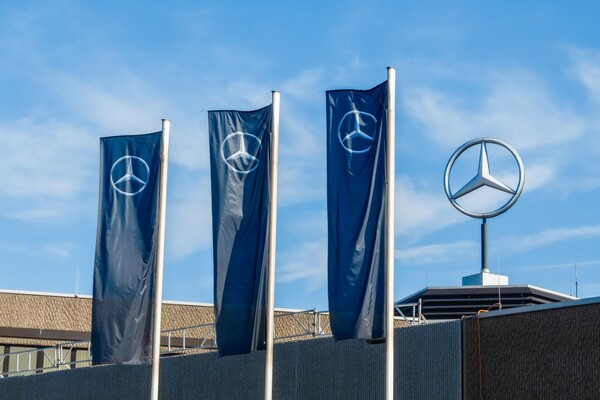
The U.S. Senate is pushing a bill to restrict access to the U.S. market for automakers with 15 percent or more Chinese ownership, and is also moving to exclude Benz from the regulation.
On Sept. 30, Reuters reported that a bill approved by the U.S. Senate Commerce Committee would ban vehicle sales in the United States by companies in which Chinese firms or investors hold more than 15 percent. The bill is aimed at further tightening existing curbs on Chinese automakers and codifying them into law.
Republican Senator Bernie Moreno (버니 모레노), who took part in sponsoring the bill, said it would not ban U.S. sales of Benz vehicles. In an interview with Reuters, he said, "What we are clearly not going to do is ban Benz vehicles in the United States," adding he was concerned about whether the company would suffer serious damage in the process of lowering Chinese ownership to below 15 percent.
Chinese ownership in Benz exceeds the bill's threshold. Tenacious Prospect Investment Limited holds 9.69 percent and BAIC Group holds 9.98 percent, bringing the combined stake to about 20 percent. Those stakes are passive investments, and Chinese investors are reported not to be involved in Benz's day-to-day management or product planning and development.
Moreno said discussions are under way to draw up a way for Benz to sell vehicles in the United States. On Sept. 30, Reuters reported that Moreno would ensure in the final bill that Benz would not be subject to a U.S. sales ban. Specific final wording and legislative procedures still remain.
The bill has participation from lawmakers from both parties. Democratic Senator Elissa Slotkin (엘리사 슬롯킨) said all Democratic senators support pushing the bill, and Republican Senator Rand Paul (랜드 폴) is the only opponent. Paul said it was unfair for the bill to directly target Benz, and said he could support the legislation if related provisions were removed.
The regulation is not expected to be limited to Benz. China's Geely holds a 17 percent stake in Aston Martin, and could see its U.S. sales affected if the bill passes in its current form. Lotus, in which Geely holds a majority stake, could also fall under the regulation.
Volvo could also be affected, as Geely is its largest shareholder. The United States previously introduced rules under the Biden administration in 2025 to block the possibility that sensitive driver data could be sent to China through software used in vehicles. The latest bill would add regulation based on the level of Chinese ownership.
The U.S. Senate plans to push again to process the bill when its session resumes in November. If the bill passes, the scope of U.S. curbs on Chinese vehicles could expand beyond Chinese automakers and vehicle software to include ownership structures involving Chinese investors.
 Seung-a Yoo
ysah@d-today.co.kr
Seung-a Yoo
ysah@d-today.co.kr