
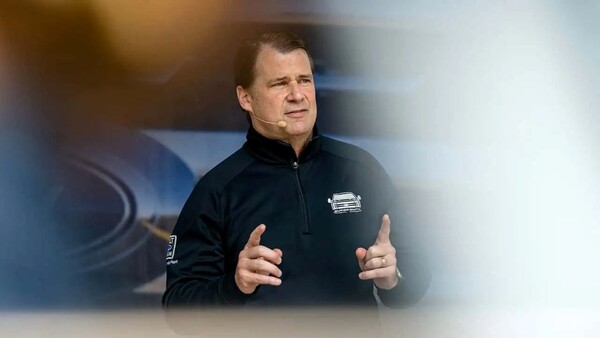
[Digital Today Seung-a Yoo, intern reporter] Ford CEO Jim Farley (짐 팔리) said decisions on Chinese automakers entering the U.S. market should be made cautiously. He argued the United States should look to Europe, where their expansion has grown quickly.
On Sept. 30, electric vehicle outlet InsideEVs reported Farley said at an Automotive News conference in Detroit that the United States should not rush to let Chinese automakers enter the market. "It is important to take time and approach it carefully," he said. "I am watching what is happening in Europe, and now Europe is in a situation it has to handle, and it is already too late," he said.
Farley said Chinese automakers are rapidly expanding overseas, increasing competitive pressure on established carmakers. He said Chinese EVs are quickly expanding market share on the back of low prices and long driving ranges. Data cited by CNBC showed the global market share of Chinese EVs rose about 70 percent from 2020 to 2025. In Europe, Chinese brands' market share has climbed to 12 percent, and Farley mentioned Chinese-made vehicles account for 25 percent of new car sales in Mexico.
Farley argued the entry of Chinese vehicles into the United States should be reviewed carefully not only for market competition but also for national security. He noted Chinese vehicles have self-driving functions and said they "can film everything," raising concerns about possible data collection through vehicles.
That does not mean Ford will stop cooperating with Chinese automakers. Ford is pursuing joint EV development with China's Geely targeting the European market, and it is also producing batteries with Chinese battery maker CATL in the U.S. state of Michigan. Farley said a strategy of cooperating with Chinese companies while also competing is possible.
Farley said, "In areas without intellectual property, we will work with China in regions where we can raise capital efficiency, like Europe or Southeast Asia." He added, "At the same time, we will compete directly with China."
Ford's cooperation with China has also drawn criticism from the U.S. government. U.S. Transportation Secretary Sean Duffy (숀 더피) last month raised national security concerns, saying Ford is expanding cooperation with Chinese companies. He particularly cited the battery business with CATL and the EV business in Spain with Geely.
The direction of U.S. regulation of Chinese vehicles has not been finalized. The U.S. Senate Commerce Committee passed a bill in July banning vehicle sales by companies with more than 15 percent Chinese ownership, but consideration by the full Senate has been delayed and it is expected to be discussed again after the November midterm elections. The bill could also affect global automakers such as Mercedes that have Chinese investors as shareholders, and the possibility of revisions during debate has been mentioned.
In the United States, policy discussions continue over Chinese automakers' entry into the market. Ford is continuing cooperation with Chinese companies while calling for a cautious approach to Chinese automakers entering the U.S. market, putting the spotlight on the future direction of U.S. regulation and Ford's response.
 Seung-a Yoo
ysah@d-today.co.kr
Seung-a Yoo
ysah@d-today.co.kr