
As debate intensifies on introducing platform regulation, a study found policy should shift away from a regulation-focused approach and toward self-regulation that helps strengthen industry competitiveness.
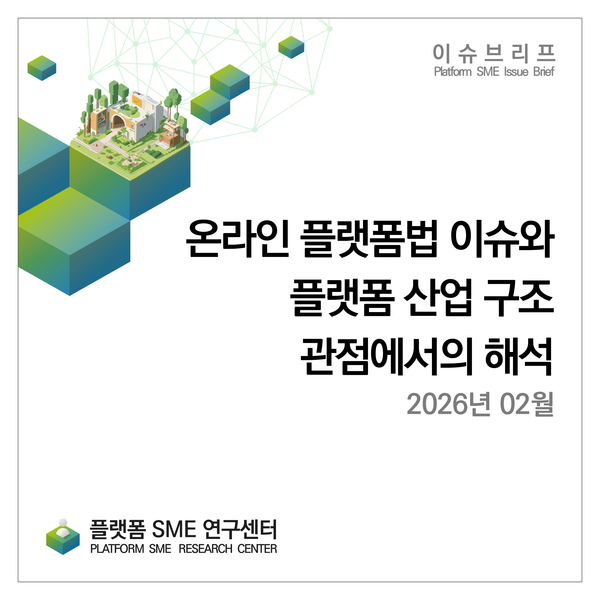
Kookmin University’s Platform SME Research Center said on Feb. 27 it published a report titled "Issues in the Online Platform Act and an interpretation from the perspective of the platform industry structure."
The report was written to analyse online platform regulatory policy, which is drawing broader debate, from the perspective of industry structure and to present future policy directions. As discussion of the need for regulation has expanded following settlement delays at TMON and WeMakePrice and personal data leaks at major platforms, it reviewed the impact that introducing regulation could have on the overall platform ecosystem based on cases from six countries including the European Union.
The report said overseas cases showed negative effects after introducing platform regulation, including reduced consumer convenience and efficiency and higher cost burdens for businesses. In the EU, which introduced the Digital Markets Act, online content search time increased after regulation, reducing consumer convenience, it said.
It also found a high likelihood that small businesses’ marketing costs could rise due to lower advertising efficiency and reduced direct traffic through platforms. It also confirmed a tendency for new business entry and investment to decline under such regulation.
The report stressed that the potential for such unexpected side effects should be fully considered in the process of implementing the Online Platform Act. It said that as the era of artificial intelligence transformation arrives, platform industry growth is directly linked to national competitiveness, and a balanced ecosystem is needed in which platform companies, consumers and small businesses can grow together. It recommended support for voluntary coexistence and cooperation among members of the platform ecosystem, rather than restricting industrial activity through uniform regulation.
Center Director Dohyeon Kim (김도현) said, "For the sustainable growth of the platform industry, self-regulation that reflects market characteristics will be more effective than uniform regulation." He added, "If we build a virtuous-cycle ecosystem of coexistence based on self-regulation, we can expect healthy growth in Korea’s platform industry."
 Hojeong Lee
lhj@d-today.co.kr
Hojeong Lee
lhj@d-today.co.kr