
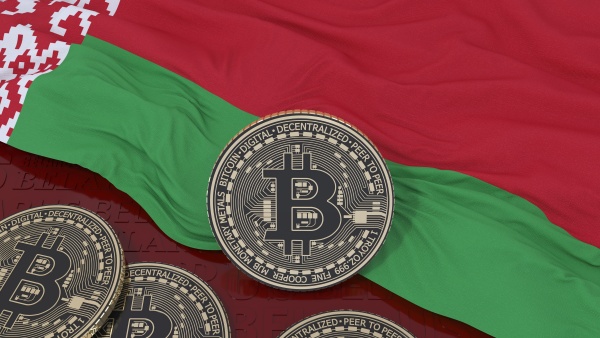
Belarus has begun procedures to launch the first cryptocurrency bank in its history. The banks will start operating after receiving approval from the National Bank of the Republic of Belarus.
Bitcoin Magazine, a blockchain outlet, reported on Sept. 28 that the move is a follow-up step after Belarus laid out a legal framework for cryptocurrency banks earlier this year. President Alexander Lukashenko (알렉산드르 루카셴코) signed Decree No. 19 in January, titled "On Certain Control Issues in the Field of Cryptocurrency Banks and Digital Tokens". The decree formally set out an institutional foundation for bitcoin and cryptocurrency banks.
The list of banks has not been disclosed. Belarus’ High-Tech Park said the launch and registration of the country’s first cryptocurrency bank began as a tangible outcome of discussions. Belarus has thus moved beyond introducing a system and into the stage of actual operator activity.
The High-Tech Park and the national bank will jointly oversee the supervisory framework. The High-Tech Park is a special zone for tax and legal exemptions in Belarus, where digital asset trading is allowed. Cryptocurrency banks will also be managed within this regulated framework.
Belarus sees the move as likely to affect the broader financial system. Dmitry Kalechits (드미트리 칼레치츠), first deputy director of the secretariat of the High-Tech Park’s supervisory board, said introducing cryptocurrency banks could improve the flow of the financial ecosystem and lead foreign investment into Belarus.
The decision extends Belarus’ pro-cryptocurrency policy of recent years. Belarus legalised mining and trading in 2017, and temporarily exempted individuals’ cryptocurrency income from taxes and reporting requirements. The exemption was extended until 2025, but its scope was later narrowed, and income generated on overseas platforms is subject to a 13 percent tax rate.
Lukashenko has repeatedly mentioned cryptocurrency mining as a way to use surplus electricity. In 2025, the Mogilev region began preparing a mining site with support from the president. Last September, Lukashenko also backed the national bank’s plan to establish a cryptocurrency bank.
With the first cryptocurrency bank entering the licensing process, Belarus’ digital asset policy is expanding beyond allowing mining and trading to bringing financial institutions into the regulated system. The next point to watch is when national bank approval will come and whether actual operations will begin.
 Jinju Hong
hongjj@d-today.co.kr
Jinju Hong
hongjj@d-today.co.kr