
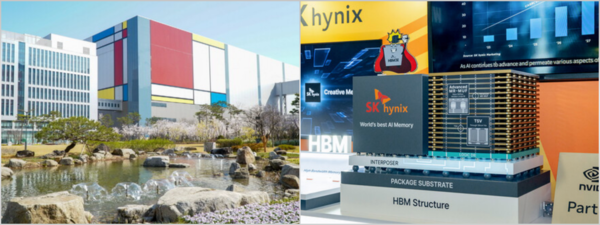
Samsung Electronics and SK Hynix will face a U.S. lawsuit over allegations they cut commodity D-RAM supply to drive up prices.
According to CourtListener, a U.S. nonprofit court records database, the U.S. District Court for the Northern District of California on Nov. 14 local time rejected a motion by Samsung Electronics, SK Hynix and Micron to dismiss the complaint.
The court found the plaintiffs had shown enough plausibility to proceed with the case based on their claims. Whether collusion actually occurred will be determined by evidence at trial. The plaintiffs, 14 U.S. consumers and three small PC assembly and distribution companies, raised the allegations in June.
The plaintiffs said the three companies, which they said hold about 90 percent market share, coordinated supply restrictions since October 2022 to gain unjust profits, alleging a violation of Section 1 of the Sherman Act. They cited production cuts alongside a shift of facilities to high bandwidth memory (HBM), memory for AI accelerators, and the discontinuation of older products as grounds for their claims.
The complaint also cited the timing of the companies' production cuts. It said SK Hynix announced in October 2022 it would reduce capital spending and output of low-margin products. It said Micron announced a production cut plan a month later. It said Samsung Electronics said in January 2023 there would be no artificial cuts, but joined production adjustments in April that year. The plaintiffs said capacity then shifted to HBM, which uses more wafer area, further reducing commodity D-RAM volumes.
The timing of discontinuing older products is also an issue. Samsung Electronics and SK Hynix wound down DDR3 lines in 2024, and the three companies successively disclosed plans the following year to reduce DDR4 production. The plaintiffs said contract prices jumped 171.8 percent over a year through the third quarter of 2025, then rose a further 50 percent in the fourth quarter and 93 to 98 percent in the first quarter of 2026, for a cumulative rise of about 697 percent over 18 months. They added that a 64GB memory kit rose from about $189 in March 2025 to about $1,080 in a year.
The three companies say there was no collusion. They argue that increasing higher-margin HBM to meet AI demand and discontinuing older products were rational management decisions by each company. They also stressed that plaintiffs' claims were not accepted in a lawsuit over suspected supply restrictions in 2016 to 2018. On why their actions appeared similar, they said they were "watching each other like hawks" and dismissed the possibility of collusion.
The court, however, said it may be difficult to view as purely independent action that the three companies successively announced DDR4 production cuts in April to June 2025 and adopted similar screening procedures in January this year to check customers' end demand and order volumes. The three companies must file responses by Dec. 7, and the first case management conference will be held on Jan. 12 next year.
 Suk Dae-geon
d2dg@d-today.co.kr