
South Korea won a seat on the International Telecommunication Union (ITU) council for a 10th consecutive term. It also rejoined the Radio Regulations Board (RRB) for the first time in 24 years.
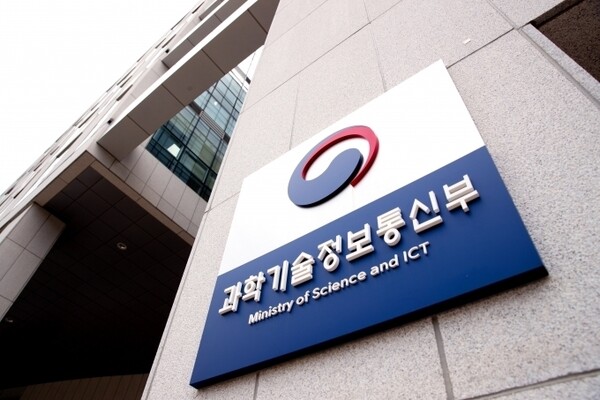
The Ministry of Science and ICT said on Sunday that South Korea won both the ITU council election and the RRB election at the 2026 ITU Plenipotentiary Conference held in Doha, Qatar.
In the ITU council election held on the day, South Korea received 144 votes to finish tied for ninth among 15 candidates in the Asia-Pacific regional group (E). In the RRB election, South Korean candidate Park Jong-min (박종민) received 136 votes and was elected along with candidates from China and Saudi Arabia.
The ITU is a United Nations specialised agency founded in 1865. It is responsible for international management of radio frequencies and satellite orbits, standardisation of information and communications technologies, and efforts to close the digital divide. Since joining the ITU in 1952, South Korea has hosted the Plenipotentiary Conference in Busan in 2014 and served two consecutive terms as head of the ITU Telecommunication Standardization Sector (ITU-T), among other activities.
The RRB is a specialised body that reviews key matters related to the application and operation of radio regulations on the use of international frequencies and satellite orbits. Winning an RRB seat is the first since 2002, 24 years ago.
The ministry said South Korea's return to the RRB would allow it to take an active part in discussions on international radio regulations that are growing in importance in the future communications environment, including 6G and low-Earth orbit satellite communications. It said the move also laid the groundwork to strengthen the competitiveness of related industries.
A South Korean delegation led by Vice Prime Minister Bae Kyung-hoon (배경훈), who is also minister of science and ICT, has conducted election outreach to member states on the ground since Nov. 9. It also delivered policy speeches and attended a women's network event and discussions on emerging technologies, introducing South Korea's AI and digital policies and its direction for international cooperation.
Bae said, "This election result is an achievement that recognises our country's ICT capabilities and contributions to the international community." He added, "We will continue to strengthen international cooperation in the AI and digital fields and take an active part in international discussions for the efficient and fair use of spectrum resources."
 Jin-ho Lee
jhlee26@d-today.co.kr