
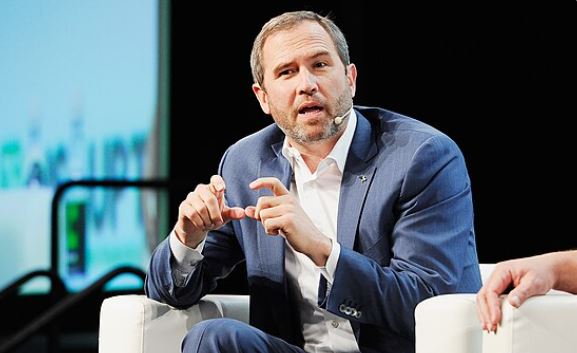
Ripple CEO Brad Garlinghouse (브래드 갈링하우스) said XRP is not the most suitable asset for all payments-related demand.
On Sept. 25 local time, blockchain outlet U.Today reported that Garlinghouse said in a recently re-highlighted interview video, "In cross-border payments, in some situations XRP can be the optimal bridge asset, but if another asset is more efficient, then it is right to use that asset."
Garlinghouse referred to cross-border payments in a conversation at an event and said XRP could be suitable for certain purposes. "For that purpose, the best bridge asset could be XRP," he said. He immediately limited the scope. He acknowledged that if a stablecoin can solve the same problem better, that choice may be more appropriate.
The remarks draw attention because Ripple is a company that shares interests with XRP. Garlinghouse distanced himself from a stance of pushing XRP unconditionally. "I am not an XRP maximalist," he said, adding that he is optimistic about various cryptocurrencies for multiple reasons. He also said he personally holds Solana (SOL).
Garlinghouse repeatedly stressed real-world use as a standard for judging the value of cryptocurrencies. He said many trends in the industry had a more negative impact on the crypto market than a net positive effect. He cited the non-fungible token (NFT) boom and the spread of meme coins as key examples. Referring to Bored Ape Yacht Club (BAYC), once seen as a flagship NFT, he said, "I don't know how value is created." He also said of the recent meme coin boom, "I really don't understand it."
He also made clear his criteria for separating technology from tokens. Any technology and any token must have real use cases and solve problems, he said. His comment that XRP is not always the answer is in the same context. He underscored that the ability to solve real problems comes before the type of asset.
Garlinghouse also drew a line on criticism of centralisation around XRP. He said he has no intention of responding any longer to claims that XRP is centralised. He added that the focus of the conversation was on resetting standards for the usefulness of cryptocurrencies overall, rather than defending XRP.
He also offered assessments of other projects in the market. Garlinghouse mentioned that he drew strong backlash after making negative remarks about Dogecoin (DOGE) a few years ago. He also said it coincided with a period when Elon Musk was making favourable comments about Dogecoin. Still, Garlinghouse reaffirmed that his view of assets lacking real-world utility has not changed.
Garlinghouse, meanwhile, publicly expressed respect for U.S. cryptocurrency company Coinbase and its CEO Brian Armstrong (브라이언 암스트롱). The two companies disagreed over the failed Clarity bill, but Garlinghouse described Coinbase as one of the few large, influential cryptocurrency companies in the United States. He said he has great respect for Coinbase and Brian.
The remarks show that, separate from Ripple's business strategy centred on XRP, the criteria for choosing assets in competition over payments infrastructure can be flexible. They also again highlighted that in real-use areas such as cross-border payments, stablecoins and financial inclusion, which digital asset solves problems most efficiently is likely to remain a key standard.
 Jinju Hong
hongjj@d-today.co.kr
Jinju Hong
hongjj@d-today.co.kr