
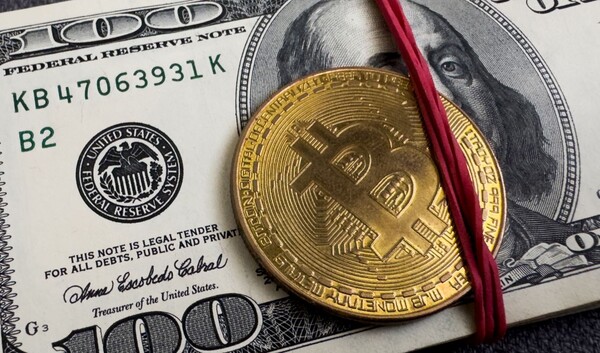
Bitcoin and the U.S. dollar have recently strengthened at the same time, prompting speculation that the traditional inverse correlation between the two assets may be wavering. Analysts say it is too early to conclude that a brief period of joint gains marks a long-term shift in correlation.
On Sept. 27 (local time), blockchain media outlet U.Today reported that bitcoin climbed from about $63,000 in early August to around $87,000, then eased slightly to trade at about $84,600. After a steady rise without a major correction, bitcoin is well above both its short- and long-term moving averages.
Over the same period, the U.S. dollar index (DXY) also strengthened. DXY fell to about 98.40 in early September but has recently moved above 101.00. The dollar index, which rose to about 101.6 in July and then declined for most of the summer, has turned higher again.
In several recent sessions, the dollar strengthened while bitcoin pushed its own highs higher. The move is notable because bitcoin and gold have typically been viewed as hedges against dollar weakness. That tendency was particularly pronounced when expectations for monetary easing rose or concerns about fiscal policy increased.
Still, the fact that bitcoin and the dollar rose at the same time is not enough to conclude that their existing relationship has structurally broken down. Risk-on sentiment, institutional asset allocation and bitcoin-specific drivers may have temporarily outweighed the dollar's traditional influence on cryptocurrency prices.
The relationship between bitcoin and the dollar index has repeatedly weakened and then strengthened again across market cycles over several years. In the past, the two assets sometimes moved in the same direction temporarily, but the inverse correlation persisted over the longer term.
Moves in the coming weeks will therefore be important. If the dollar stays strong and bitcoin holds its gains or remains elevated even after a pullback, the latest co-movement could be a more meaningful signal. If bitcoin comes under downward pressure alongside dollar strength, the inverse relationship seen in the past could re-emerge.
For now, the joint strength in bitcoin and the dollar is seen as closer to a temporary decoupling than a long-term shift in market structure.
Market participants are expected to watch upcoming Federal Reserve comments, inflation indicators and shifts in risk appetite. These macroeconomic variables could be key in judging whether bitcoin's rally can continue independently of dollar moves or whether the inverse correlation returns as in the past.
 Seung-a Yoo
ysah@d-today.co.kr
Seung-a Yoo
ysah@d-today.co.kr