
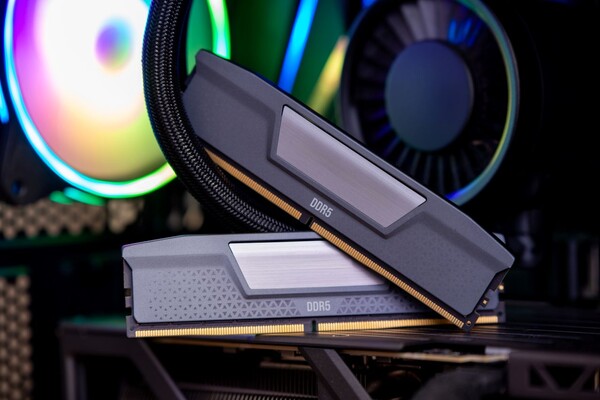
[DigitalToday Seung-a Yoo, intern reporter] Acer CEO Jason Chen (제이슨 첸) has pushed back against recently spreading forecasts that a memory supply shortage will be prolonged.
On Sept. 21, TechRadar reported that Chen said shortages of DDR4 and DDR5 memory are not currently severe and are unlikely to persist until 2030.
Chen laid out his view on the PC components market through a report by Taiwan's Economic Daily News. He assessed that supply of DDR4 and DDR5 memory is "quite large" and said processors are also not in major short supply. That differs from recent views in and outside the industry that the memory supply crunch could last for several years.
He added that the burden of high prices is unlikely to ease immediately. Chen said component prices are "fluctuating" at high levels. He forecast PC prices will keep rising in the fourth quarter of 2026 and put the average increase at 5 to 20 percent.
He expects prices to start falling after mid-2027. Chen said PC prices could decline from mid-2027. He added that if semiconductor production expands further, particularly in China, the memory supply shortage will not last until 2030. "It's impossible for a shortage to continue until 2030," he said.
His remarks differ from broader market expectations. Some analysts and industry figures have recently said a RAM shortage could last until 2030. Chen, in contrast, judged that current supply conditions are not as bad as concerns raised in the market. His remarks could also be seen as placing more weight on conditions in China than on the overall global market.
That does not mean the burden on consumers will fall immediately. Memory prices have risen sharply in recent months, and PC prices are expected to face upward pressure until mid-2027. Chen also forecast PC prices would rise 5 to 20 percent in the fourth quarter this year, suggesting component and finished product prices could keep climbing in the short term.
Ultimately, the key point is a difference in forecasts on how long the supply crunch will last. Chen said supply of DDR4 and DDR5 memory and processors is not in a severe shortage, while acknowledging component prices are high. Attention is expected to focus on when additional production capacity, including in China, will feed into supply and whether PC prices will turn lower after mid-2027 as Chen forecasts.
 Seung-a Yoo
ysah@d-today.co.kr
Seung-a Yoo
ysah@d-today.co.kr