
The Philippines is reviewing the introduction of electric and hybrid passenger vessels suited to its waterways, drawing on Norway’s experience operating electric ferries. A key point is designing not only the vessels but also charging infrastructure, power supply and operating schedules together.
CleanTechnica reported on Sept. 21, local time, that officials from the Philippines’ transport ministry, the Maritime Industry Authority and shipping industry representatives recently visited Norway for four days to inspect electric ferry operations and charging facilities. The Norwegian Embassy in the Philippines co-hosted the visit with Innovation Norway and Maritime CleanTech.
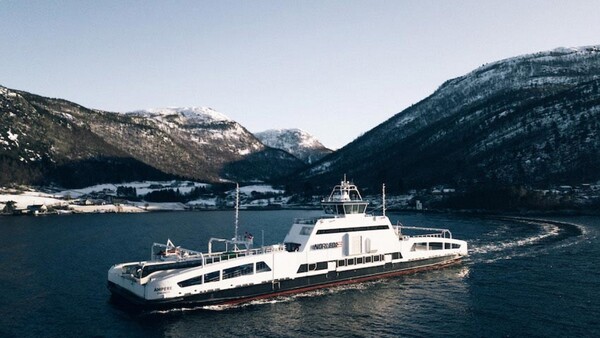
Norway began operating MF Ampere, known as the world’s first fully electric car ferry, in 2015. In 2022 it deployed the high-speed electric passenger vessel MF Medstraum. About 180 electric ferries now operate on more than 100 routes. Ferries that repeatedly run fixed routes can charge at terminals, making them relatively well suited to batteries.
The two countries also laid a basis for cooperation at an electric ferry conference held in November last year. The Philippine Coastwise and Inland Water Transport Association, IMP Shipyard and Norway’s ZEM agreed to jointly develop a prototype electric and hybrid ferry tailored to operating conditions in the Philippines.
The Philippines is already operating an in-house developed electric ferry, M/V Dalaray, on the Pasig River. The 13-metre aluminium catamaran can carry 40 passengers and 3 crew and is fitted with a 160 kWh battery. The development team said electricity costs about 45 pesos per km, about 977 won, lower than the 130 to 135 pesos, about 2,824 to 2,932 won, in fuel costs for a comparable diesel ferry. It is not a comparison of total operating costs that includes purchase and maintenance.
The Philippines, made up of 7,641 islands, relies heavily on passenger ferries for transport. But it is difficult to operate long-distance inter-island routes and large vessels using batteries alone. The Philippines therefore needs to build a system suited to its own conditions rather than directly replicating the Norway model. Norway’s experience is expected to provide a direct reference for the early design of the Philippines’ electric ferry market.
 Jae-won Choi
ittt_0801@d-today.co.kr
Jae-won Choi
ittt_0801@d-today.co.kr